
Can Dogs Be Allergic to Wasp or Bee Stings?
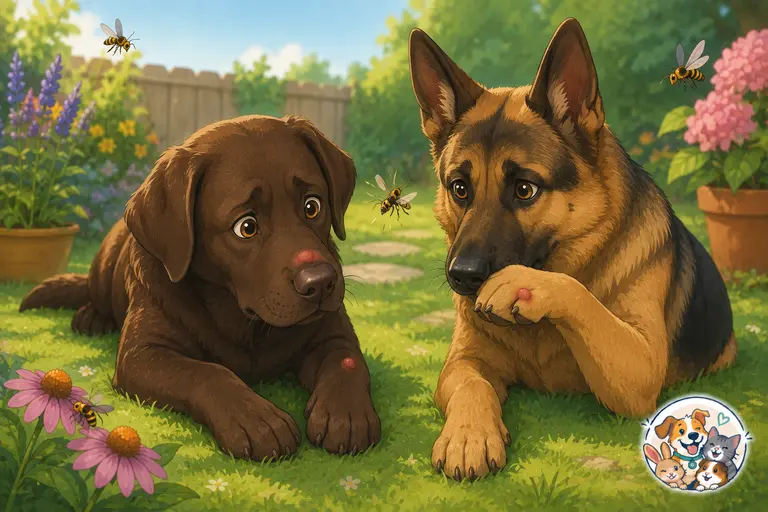
Can Dogs Be Allergic to Wasp or Bee Stings?
With the return of warm weather, wasps and bees become much more active. And because many dogs love chasing anything that flies… encounters do not always go as planned.
The idea for this article came after an unfortunate experience at home: within just a few days, my husband was stung three times by wasps and developed an allergic reaction. It made us ask a very simple question: can dogs also have an allergic reaction after a sting?
The answer is yes. Although most stings remain mild, some can require rapid veterinary attention.
Do Dogs Get Stung Often?
Yes.
Dogs are naturally curious. They enjoy sniffing flowers, exploring bushes, or trying to catch insects that fly past their nose.
As a result, stings often affect:
the muzzle;
the lips;
the tongue;
the paws;
and sometimes the ears.
A sting inside the mouth requires particular attention because it can cause significant swelling.
What Are the Most Common Symptoms?
In most cases, a sting simply causes:
immediate pain;
localised swelling;
redness;
a dog licking or scratching the affected area.
These symptoms usually improve within a few hours.
Can Dogs Be Allergic?
Yes, just like humans.
Some dogs can develop an allergic reaction very quickly after a sting.
Warning signs include:
significant swelling of the face;
very swollen eyelids;
difficulty breathing;
excessive salivation;
vomiting;
unusual weakness;
collapse or fainting.
These symptoms require urgent veterinary care.
A Sting in the Mouth Requires Extra Caution
Even without an allergic reaction, a sting on the tongue or in the throat can be dangerous.
The resulting swelling can make breathing difficult.
If your dog has tried to catch a bee or wasp in its mouth and you notice significant swelling, contact your veterinarian quickly.
What Should You Do If Your Dog Is Stung?
Stay calm.
Watch your dog carefully during the minutes that follow.
If a stinger is visible, which is more commonly the case with a bee sting, you can try to remove it gently without squeezing the venom sac.
You can also apply a cold compress wrapped in a clean cloth to help reduce swelling.
However, never give your dog medication intended for humans without veterinary advice.
How Can You Reduce the Risk of Stings?
Although it is impossible to prevent every sting, a few precautions can reduce the risk:
do not let your dog play with insects;
be cautious near flowers that attract large numbers of bees;
check your garden for possible wasp nests;
keep an eye on your dog when it explores hedges or fruit trees.
When Should You Contact a Veterinarian Immediately?
Contact a veterinarian quickly if:
your dog has difficulty breathing;
its face becomes severely swollen;
it has been stung several times;
the sting is inside the mouth or throat;
it becomes very weak or loses consciousness.
If you are unsure, it is always safer to ask for veterinary advice promptly.
In Conclusion
Most wasp or bee stings cause only temporary pain in dogs.
However, just like humans, dogs can experience an allergic reaction, although severe reactions remain relatively uncommon.
By monitoring your companion closely after a sting and contacting a veterinarian quickly if unusual symptoms appear, you can help ensure that any serious reaction is treated as soon as possible.