
Do Birds Really Recognise Their Owners? What Science Reveals
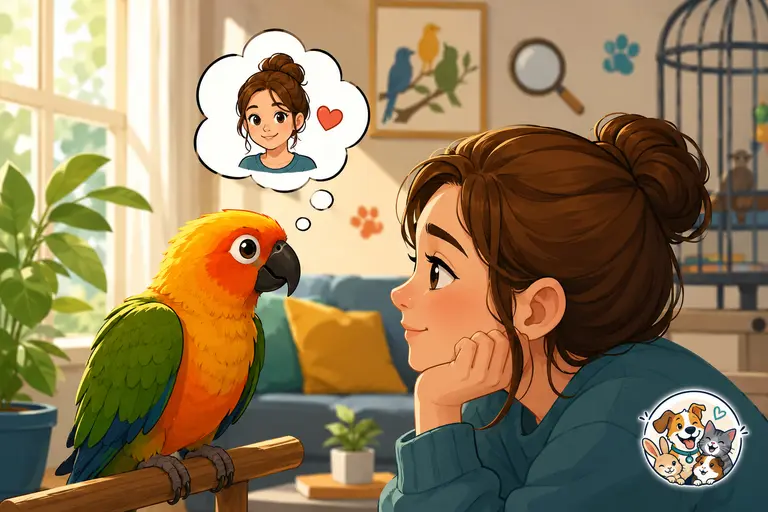
Do Birds Really Recognise Their Owners? What Science Reveals
If you share your daily life with a parrot, budgie, cockatiel, or even a canary, you may have wondered: does my bird really recognise me, or is it simply reacting to food?
The answer is more interesting than it may seem. Research into avian cognition has shown that many bird species are capable of recognising individual humans, remembering familiar faces or voices, and forming strong social bonds.
A Better Memory Than Many People Realise
Birds have far more sophisticated cognitive abilities than they were once given credit for.
Some species, particularly parrots and corvids such as crows and ravens, are especially well known for their learning and memory skills.
Depending on the species and individual, birds may learn to recognise:
familiar human faces;
voices and sounds;
daily routines;
feeding schedules;
people associated with safety and positive interactions.
These abilities can allow a bird to react differently to a familiar person and to someone it does not know.
They Can Recognise Your Voice
Some birds may respond to a familiar voice even before they can see the person speaking.
Owners often notice their bird becoming more vocal, moving towards them, or showing increased activity when a familiar person enters the room or speaks nearby.
Through repeated interactions, birds can learn to associate particular voices with familiar individuals and experiences.
They Can Form Strong Social Bonds
For highly social species, the relationship with a human caregiver can involve much more than simply receiving food.
Some birds actively seek:
company;
gentle physical contact when appropriate for the species and individual;
play and enrichment;
vocal interaction;
attention from familiar people.
Parrots in particular can develop very strong social relationships and may show clear excitement when a familiar person returns.
Every Species Is Different
Not all birds express familiarity or attachment in the same way.
For example:
parrots are highly social and can develop strong relationships with members of their household;
budgies can become very familiar with the people who care for and interact with them regularly;
canaries may be more independent but can still become accustomed to familiar voices, routines, and people.
Personality, previous experiences, socialisation, and living conditions also play an important role.
How Can You Tell If Your Bird Recognises You?
Several behaviours may suggest that a bird clearly distinguishes you from unfamiliar people.
For example, your bird may:
approach when you come near;
become more vocal when you arrive;
choose to step onto your hand if it has been trained and is comfortable doing so;
respond to your voice;
appear relaxed around you while remaining cautious around strangers.
These behaviours can reflect familiarity, trust, and positive associations.
Can a Bird Forget You?
The length of time a bird remembers a particular person depends on the species, the individual, and the strength of previous interactions.
Some birds are capable of retaining long-term memories and may recognise familiar people after extended periods apart.
However, it is difficult to give a single time frame that applies to every bird.
Regular, calm, and positive interactions are therefore important when building a lasting relationship.
In Conclusion
Yes, many birds are capable of recognising familiar humans.
Their responses are not necessarily based on food alone. They can learn faces, voices, routines, and patterns of interaction, and some species can form strong social bonds with the people who care for them.
So the next time your bird approaches or becomes excited when you return, it may not simply be waiting for a favourite treat. It may also be responding to someone it genuinely knows and trusts.