
Do Fish Get Bored in Their Aquarium?
Do Fish Get Bored in Their Aquarium?
For a long time, fish were considered rather unexpressive animals, living peacefully in their aquarium without needing much stimulation.
However, research and observations from aquarium keepers reveal a very different reality: some species are curious, can learn new things, and interact with their environment.
So, can fish really get bored?
Yes, Some Fish Can Become Bored
Like all animals, fish have needs that go beyond simply being fed.
In a poor environment with no hiding places, plants, or elements to explore, some species may show signs of insufficient stimulation.
This does not necessarily mean that they experience boredom exactly as humans do, but they can be negatively affected by a monotonous environment.
Does This Apply to All Fish?
No.
Every species has its own specific needs.
A betta, goldfish, angelfish, or cichlid will not have the same behaviour or the same requirements.
Some species are highly active and curious, while others prefer to remain discreet or hidden for much of the day.
This is why it is essential to learn about the specific needs of each fish before bringing one home.
How Can You Make an Aquarium More Stimulating?
A few simple improvements can considerably enrich your fish’s daily life:
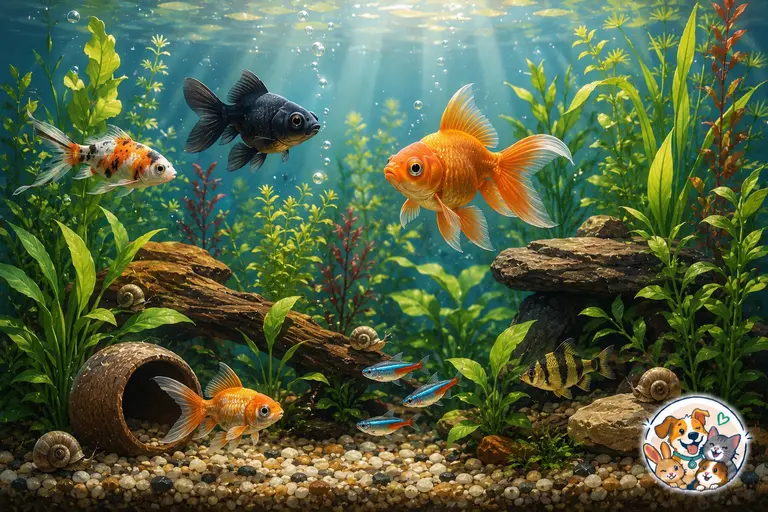
🌿 add live plants;
🪨 include rocks or natural roots;
🏡 create hiding places;
💧 provide enough swimming space for the species;
🐠 keep compatible fish together when appropriate for the species.
A well-designed aquarium allows fish to explore, hide, interact, and express more of their natural behaviours.
Do Fish Recognise Their Environment?
Yes.
Many owners notice that their fish know their aquarium very well.
They often use the same routes, choose favourite hiding places, and regularly wait for food in the same area.
At home, we see the same thing with our koi: as soon as we approach the pond, they come towards us almost immediately. This behaviour shows that they can learn and recognise their owners’ routines.
Signs of an Unsuitable Environment
An aquarium that is too small or lacks enrichment may encourage certain unusual behaviours:
a fish that remains constantly motionless;
repetitive swimming back and forth along the glass;
an unusual reduction in activity;
less interest in its surroundings.
Of course, these behaviours can also be caused by illness or poor water quality. It is therefore important to check all relevant conditions before drawing conclusions.
In Conclusion
Fish do not simply live to eat and swim.
Many species are capable of learning, exploring their surroundings, and displaying a wide range of behaviours when they live in a suitable aquarium.
By providing enough space, appropriate hiding places, and an environment suited to their needs, you contribute not only to their well-being but also create more opportunities to observe the richness of their natural behaviour.