
How to Set Up an Aquarium for Beginners: The Complete Guide
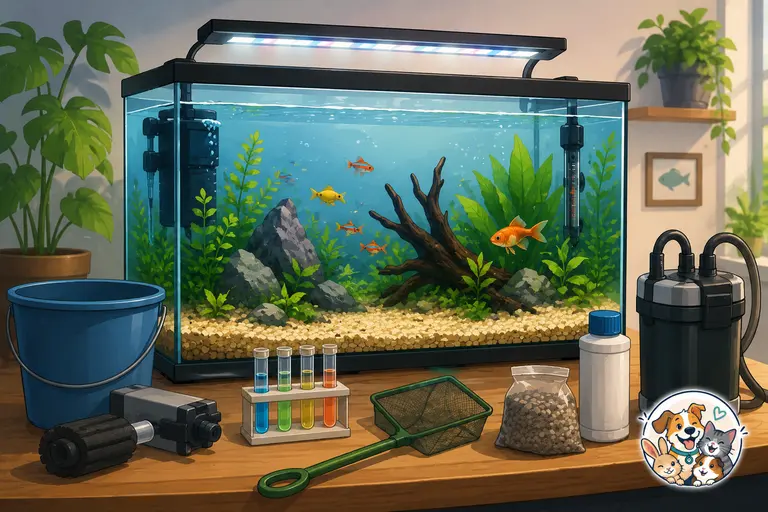
How to Set Up an Aquarium for Beginners: The Complete Guide
Setting up an aquarium is an exciting experience. Watching fish move through an environment you have created yourself can be both relaxing and fascinating.
However, a healthy aquarium requires preparation. A good setup is essential for fish welfare and helps prevent many of the most common beginner mistakes.
Here are the main steps for getting your first aquarium off to a good start.
Choose a Suitable Aquarium
Many beginners are tempted to start with a very small aquarium.
In practice, a larger volume is often easier to keep stable.
For a first aquarium, a tank of around 60 to 120 litres can be a practical starting point, depending on the species you plan to keep.
The greater the water volume, the more slowly temperature and water parameters generally change.
Find the Right Location
The position of the aquarium is very important.
Place it:
on a strong, level, and stable piece of furniture designed to support its weight;
away from windows exposed to direct sunlight;
away from radiators and other heat sources;
in a relatively calm area;
close to suitable electrical outlets.
Direct sunlight can encourage excessive algae growth and may also cause unwanted temperature changes.
Install the Substrate
The bottom layer of the aquarium plays an important role in both appearance and maintenance.
Depending on your setup, you can use:
aquarium gravel;
aquarium-safe sand;
a suitable planted-aquarium substrate if you plan to grow live plants.
Rinse substrates when recommended by the manufacturer before adding them to the aquarium.
Add Decorations and Hiding Places
Decorations are not only there to make the aquarium attractive.
They can also provide shelter and help fish feel more secure.
You may add:
aquarium-safe wood;
rocks suitable for aquarium use;
live plants;
appropriate caves and hiding places.
Avoid objects that are not specifically safe for prolonged use underwater, as some materials may release unwanted substances.
Install the Essential Equipment
The equipment required depends on the aquarium and the species being kept, but common essentials include:
a filter suitable for the aquarium volume and livestock;
a heater if you are keeping species that require warmer water;
a thermometer;
appropriate lighting.
The filter is especially important because it supports both mechanical filtration and the beneficial microorganisms involved in biological filtration.
Fill the Aquarium
Add the water gradually.
To avoid disturbing the substrate, you can pour the water slowly onto a clean plate or similar surface placed on the bottom of the aquarium.
If you use tap water containing chlorine or chloramine, treat it with an aquarium water conditioner according to the manufacturers instructions.
Allow the Nitrogen Cycle to Establish
This is one of the most important stages of setting up an aquarium.
A new aquarium needs time to develop the beneficial bacteria that process toxic waste products.
The process often takes several weeks, but you should not rely on a fixed number of days alone.
Use appropriate aquarium tests to monitor ammonia, nitrite, and nitrate and confirm that the aquarium is properly cycled before adding fish.
Introducing fish into an uncycled aquarium is one of the most common and potentially harmful beginner mistakes.
Add Fish Gradually
Once the aquarium is cycled and the water parameters are appropriate for the chosen species, avoid adding a large number of fish at once.
Add livestock gradually so the biological filtration can adapt to the additional waste load.
Always research the adult size, social requirements, water parameters, and compatibility of each species before purchasing them.
Maintain the Aquarium Regularly
An aquarium requires regular maintenance.
Your routine may include:
performing partial water changes according to your tanks needs;
cleaning the glass when necessary;
checking the temperature;
monitoring water parameters;
making sure the filter is working correctly;
removing dead or damaged plant material.
The amount and frequency of water changes can vary depending on stocking levels, filtration, feeding, plants, and water quality.
Common Mistakes to Avoid
Some beginner mistakes occur very frequently:
choosing an aquarium that is too small for the intended species;
adding fish before the nitrogen cycle is established;
overfeeding;
replacing or aggressively cleaning all filter media at once;
rinsing biological filter media in untreated chlorinated tap water;
keeping incompatible species together;
neglecting regular water testing and maintenance.
Avoiding these mistakes greatly improves the chances of maintaining a stable and healthy aquarium.
In Conclusion
Setting up an aquarium requires patience, but careful preparation makes a major difference.
By choosing suitable equipment, allowing the nitrogen cycle to establish, testing the water, and selecting compatible species, you can create a much more stable environment for your fish.
With regular maintenance and good observation, your aquarium can develop into a fascinating little ecosystem to enjoy every day.