
Can Mosquitoes Transmit Diseases to Dogs and Cats?

Can Mosquitoes Transmit Diseases to Dogs and Cats?
Summer means long evenings outdoors… but it also marks the return of mosquitoes. Although their bites are often considered little more than a nuisance, they can sometimes represent a real risk for our four-legged companions.
So, are mosquitoes really dangerous for dogs and cats? The answer is yes, although the most serious situations remain relatively uncommon in France.
Do Mosquitoes Bite Dogs and Cats?
Yes.
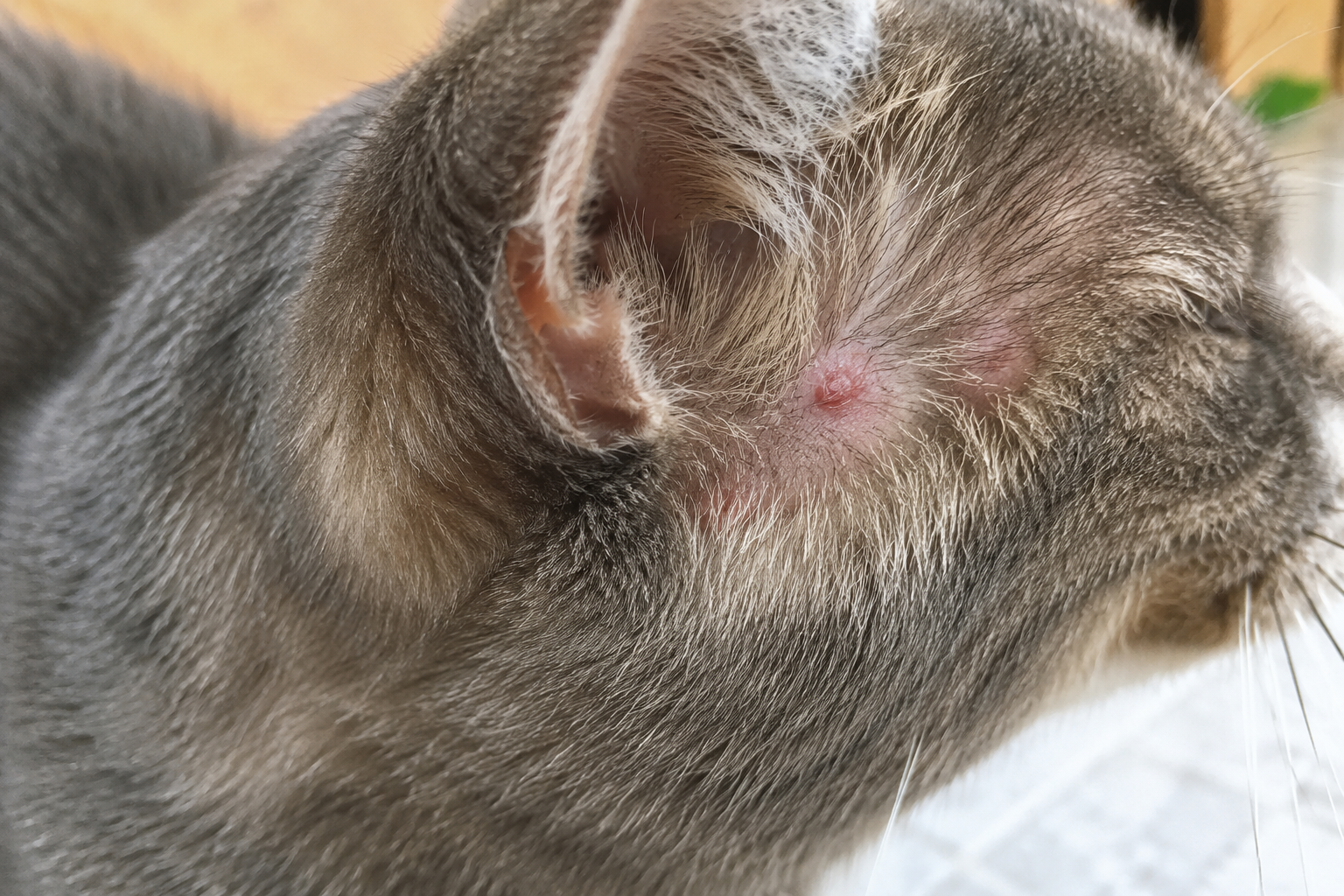
Mosquitoes do not only bite humans. Dogs and cats can also be bitten, particularly on areas where the fur is thinner:
the ears;
the muzzle;
the belly;
the eyelids.
Most of the time, the bite causes only slight redness or itching that disappears quickly.
Can a Simple Mosquito Bite Cause an Allergic Reaction?
Just like humans, some animals can develop a stronger reaction after a bite.
You may notice:
significant redness;
localised swelling;
intense itching;
an animal scratching or licking excessively.
These reactions are usually limited, but if the swelling is severe or your companion has difficulty breathing, contact a veterinarian quickly.
Can Mosquitoes Transmit Diseases?
Yes.
Mosquitoes can transmit certain parasites or pathogens.
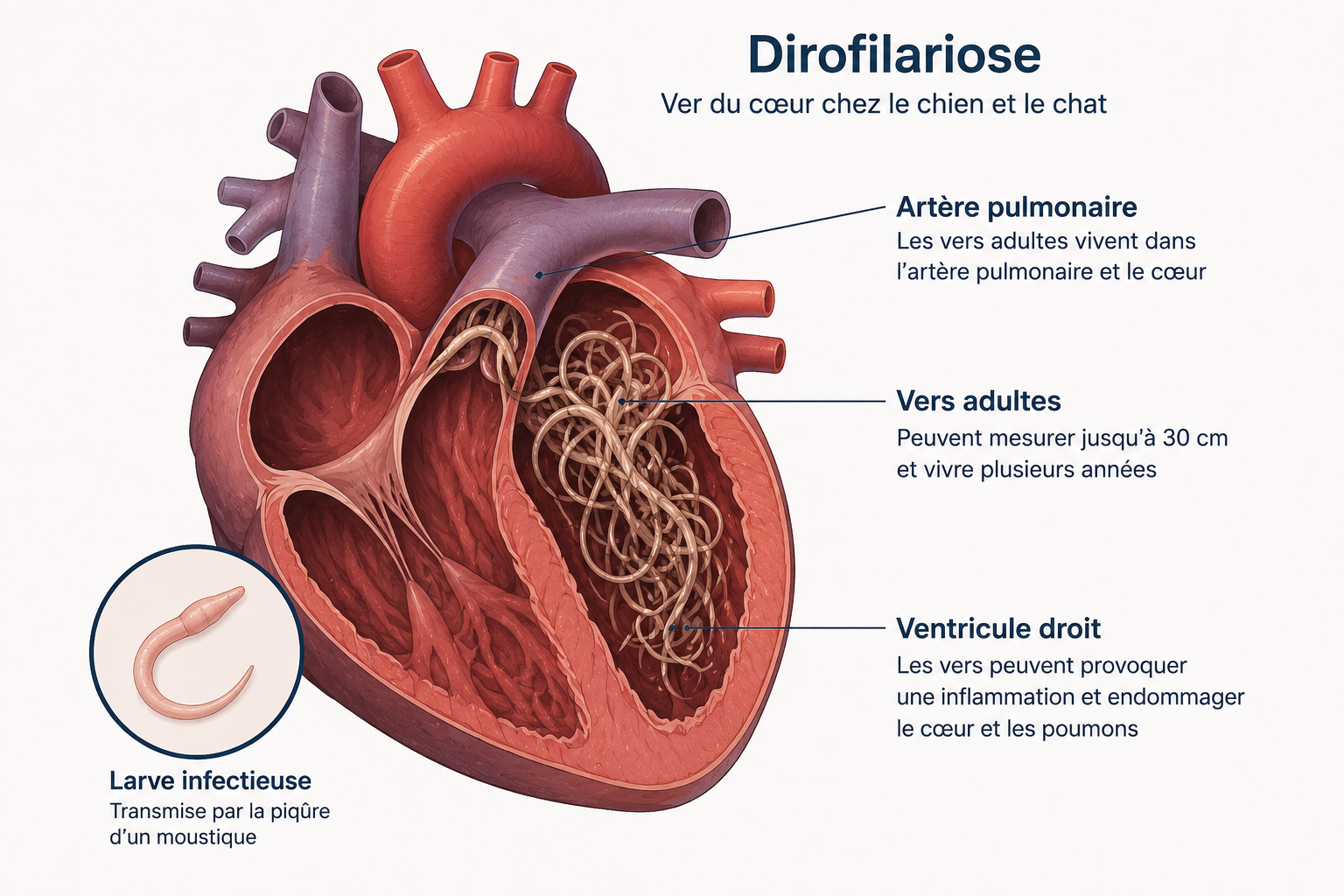
The best-known disease in dogs is heartworm disease, also known as dirofilariasis.
When an infected mosquito bites a dog, it can transmit tiny larvae that gradually migrate towards the heart and pulmonary arteries.
This disease is particularly common in warm and humid regions, especially around the Mediterranean basin, but it can also occur in other areas.
In cats, heartworm disease is much rarer, but it is still possible.
What Are the Symptoms of Heartworm Disease?
At first, the disease may go completely unnoticed.
As the worms mature, several symptoms can appear:
unusual tiredness;
a persistent cough;
shortness of breath;
reduced activity;
in the most severe cases, heart failure.
These symptoms may take several months to appear after the mosquito bite.
How Can You Protect Your Dog or Cat?
Prevention remains the best approach.
A few simple measures can help reduce the risk:
use a parasite prevention product recommended by your veterinarian;
avoid outings when mosquitoes are most active, especially around dusk, whenever possible;
remove standing water around your home when it is accessible;
install mosquito screens if your pet spends time near open windows.
If you are travelling with your pet to an area where heartworm disease is present, ask your veterinarian for advice before you leave.
When Should You Consult a Veterinarian?
Make an appointment with your veterinarian if:
your dog or cat develops a strong reaction after a mosquito bite;
itching continues for several days;
you notice an unusual cough, shortness of breath, or unexplained tiredness after a stay in a high-risk area.
If in doubt, it is always better to seek professional advice.
In Conclusion
Mosquito bites are usually harmless for dogs and cats.
However, they can sometimes cause an allergic reaction or transmit certain diseases, including heartworm disease in dogs.
A few preventive measures can significantly reduce the risks and help you enjoy the summer more safely with your companion.