Find an animal nutrition professional
Nutrition is part of an animal’s everyday life and should be adapted to its individual characteristics. Species, age, activity level, lifestyle, weight and type of food are among the factors to consider. An animal nutrition professional can help owners understand and organize their companion’s diet. Prousty & Co allows you to search for professionals offering this type of guidance.
Nutrition adapted to each animal
Nutritional needs are not identical for every animal. They vary according to factors such as species, age, life stage, activity level and individual characteristics. Feeding a growing young animal therefore does not necessarily follow the same approach as feeding an adult or senior animal.
One aim of nutritional guidance is to consider these different factors, review the current diet and help the owner organize meals in a way that is consistent with the animal’s individual situation.
What happens during a nutrition consultation?
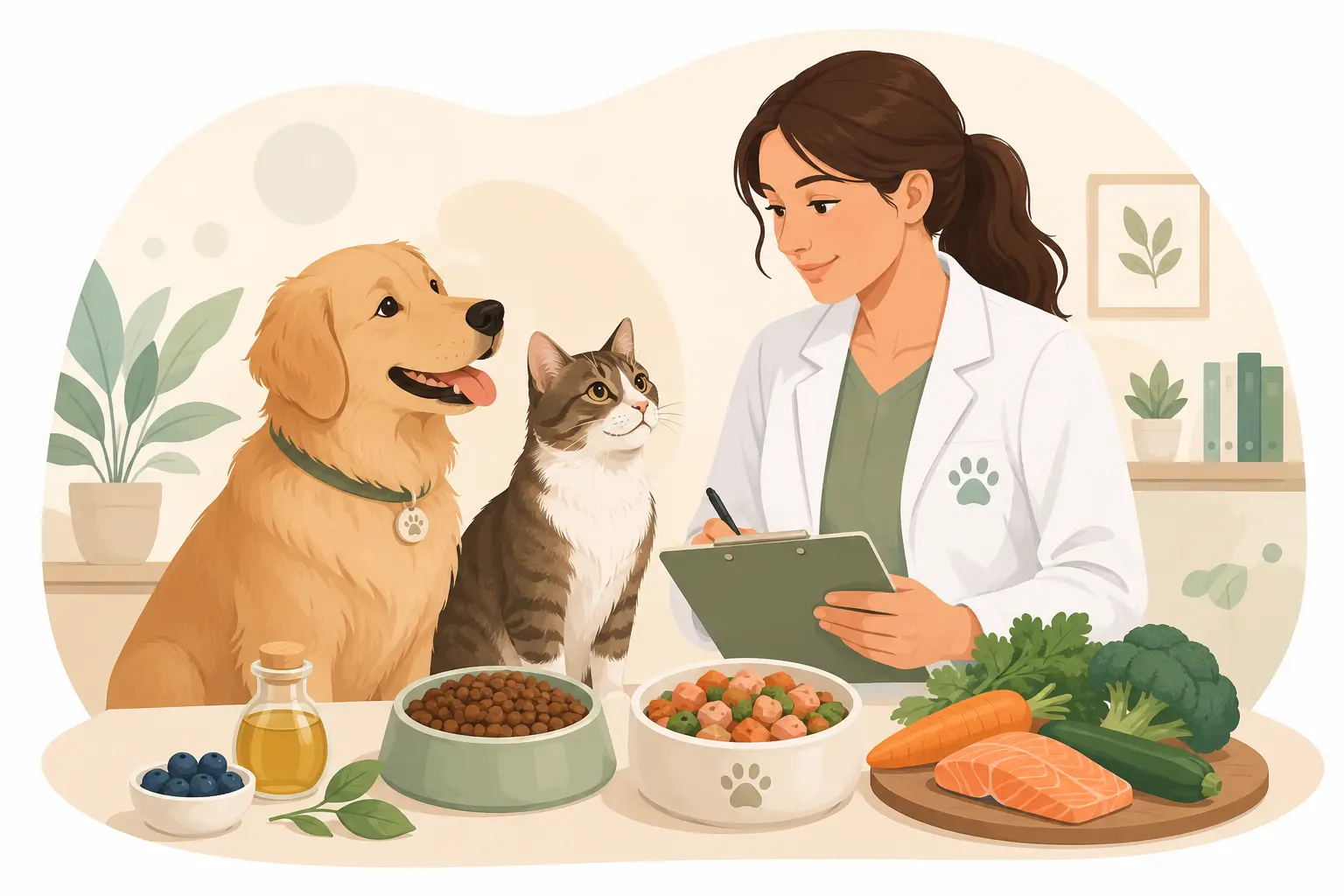
An initial consultation may begin with a detailed diet history: foods provided, quantities, meal frequency, treats, any supplements and the animal’s habits. The professional may also ask about age, weight, activity and lifestyle.
Using this information, the professional can explain points to monitor and suggest a feeding organization appropriate to the scope of their service. Follow-up arrangements then depend on the professional and the animal’s situation.
Dry food, wet food or prepared diets: how to navigate the options
Owners now have many options for feeding their animals. Depending on the species and situation, diets may include dry food, wet food or different forms of prepared meals.
The choice should not rely solely on marketing terminology or an ingredient list. Nutritional composition, whether the food is complete or complementary, quantities provided and suitability for the individual animal are also important factors to consider.
Portions, meals and treats
The amount of food provided is part of the overall nutritional balance. Feeding information on packaging may provide a starting point, but actual needs can vary according to the individual animal and its activity level.
Treats, rewards and foods given outside regular meals should also be considered as part of daily intake. A professional can help you review everything your animal receives rather than focusing only on the main meal.
Understanding pet food information
Pet food packaging can contain a large amount of information, including composition, analytical constituents, feeding instructions, recommended quantities and intended use. A professional can help you understand these details within the context of your animal’s overall diet.
It is particularly useful to distinguish food intended to form the main diet from a complementary product that is not necessarily designed to meet all of the animal’s nutritional requirements on its own.
Changing your animal’s diet
A change in diet may be considered for different reasons, such as a new life stage, change in activity, different food product or new meal routine. Before significantly changing feeding habits, it is useful to understand why the change is being considered and how it should be organized.
If the change is related to a health problem, persistent digestive issues, a suspected allergy or a diet prescribed as part of treatment, seek advice from the veterinarian responsible for the animal’s care.
How to choose an animal nutrition professional
Review the professional’s background, training and experience, as well as the species for which they offer services. Animal nutrition requires specific knowledge, and nutritional needs vary significantly between species and situations.
Also ask how the service works, what information is required, whether follow-up is offered and how the professional works when a situation also requires veterinary involvement.
Animal nutrition and veterinary care
Nutrition can form part of the medical management of certain conditions. An animal that is ill, has symptoms, unexplained weight loss or gain, persistent digestive problems or other health concerns should be evaluated by a veterinarian.
Likewise, a therapeutic diet prescribed as part of the management of a disease should not be replaced or modified without discussing it with the veterinarian responsible for the animal. Nutritional guidance and veterinary care can then complement each other within their respective areas.
How to prepare for an animal nutrition consultation
Before the appointment, record what your animal actually eats each day: brand or type of food, approximate quantities, number of meals, treats, any table foods and supplements. This information provides a more complete picture of the animal’s diet.
Also prepare information about age, weight, activity, habits and, where relevant, veterinary care. The professional can tell you before the appointment whether any additional information is required.
Find an animal nutrition professional on Prousty & Co
Prousty & Co allows you to search for professionals offering animal nutrition and feeding services. Use the location filters to discover professionals matching your search.
Review the information available on their profiles and contact the professional directly to introduce your animal, describe its current diet and explain the type of guidance you are looking for.