




Everything you need to know about the Leucistic Axolotl
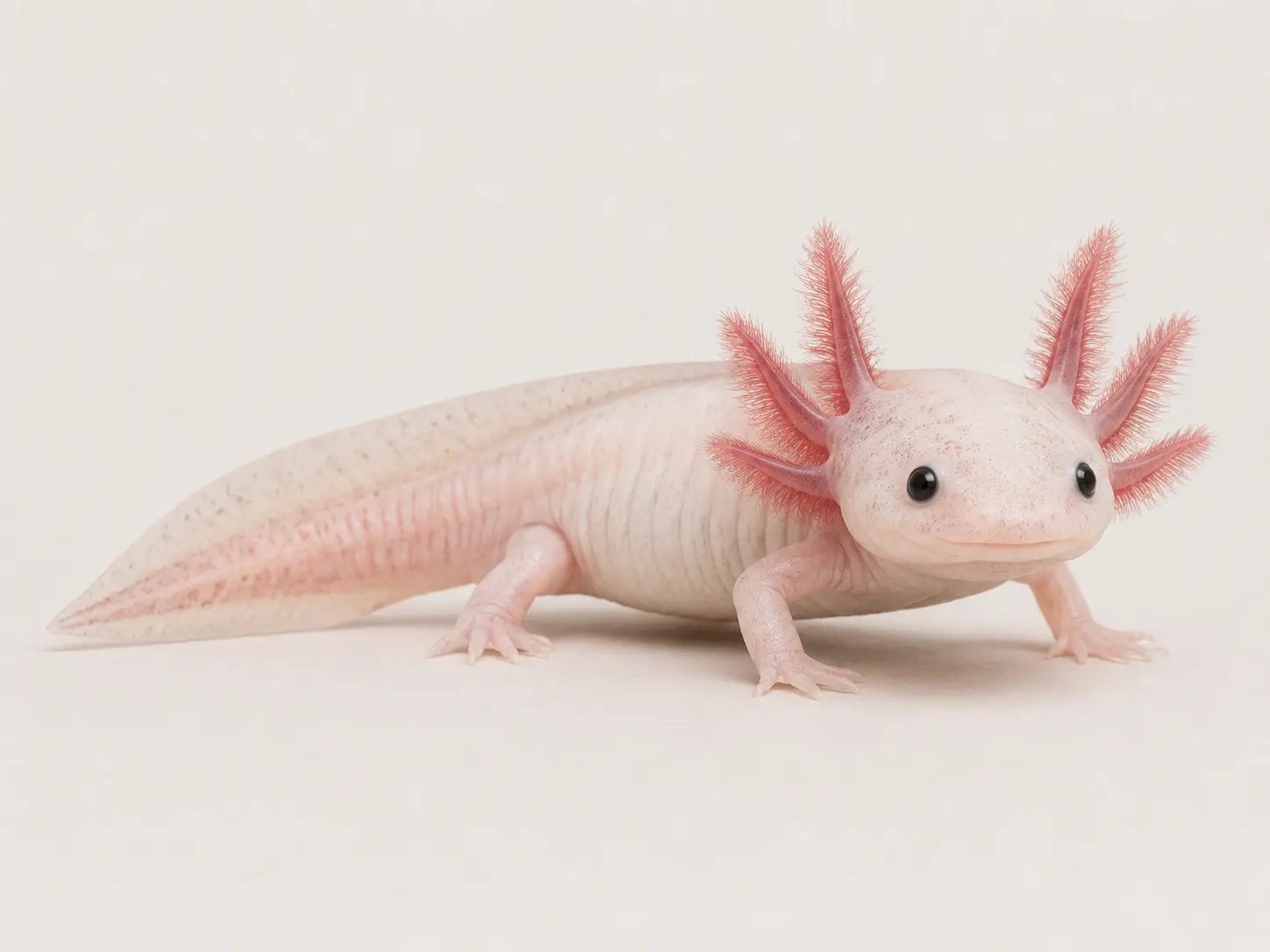
With its pale pink-white coloration, external gills and dark eyes, the Leucistic Axolotl has an immediately recognizable appearance. This coloration does not change the species’ fundamental needs: its well-being primarily depends on a stable aquatic environment, sufficiently cool water, suitable filtration and an appropriate diet.
What is a Leucistic Axolotl?
The term leucistic describes a color form of the Axolotl, Ambystoma mexicanum. Leucistic individuals generally display very pale pink-white skin combined with dark eyes.
Leucism should therefore not be confused with a separate species or subspecies. Husbandry requirements remain those of the Axolotl.
Captive breeding has produced different color forms, including leucistic, melanic and albino individuals.
An amphibian that remains aquatic
Unlike many salamanders, the Axolotl retains several larval characteristics into adulthood, including its external gills. It normally remains aquatic throughout its life.
The aquarium is therefore its actual living environment rather than a temporary enclosure. Its design and water stability play a central role in husbandry.
Direct handling should be limited to situations where it is genuinely necessary. When moving the animal, an appropriate method that reduces direct contact with the skin is preferable.
Preparing the aquarium before arrival
The aquarium should be prepared and stabilized before the animal arrives. Introducing an Axolotl into a newly filled aquarium without an established biological cycle may expose it to accumulating ammonia or nitrite.
A generous water volume generally makes stable parameters easier to maintain. Hiding places and sufficient floor space should also be provided.
Decor should be selected with the Axolotl’s delicate skin and external gills in mind. Sharp elements or objects likely to cause injury should be avoided.
Cool and stable water
The Axolotl is adapted to cool water. A range around 16 to 18°C is commonly used as a husbandry reference, although stability is also important.
Temperature should be monitored with a reliable thermometer, particularly during warm periods. Aquarium placement should take room temperature variations and direct sunlight into account.
Prolonged increases in temperature can become problematic. It is therefore preferable to anticipate warm periods rather than waiting until the water is already too warm.
Monitoring water parameters
Water that looks clear is not necessarily suitable. Ammonia, nitrite, nitrate, pH and temperature can be monitored to follow the aquarium’s stability.
In a functioning biological aquarium, ammonia and nitrite should remain undetectable. Nitrate levels are managed in part through aquarium maintenance and appropriate water changes.
Chlorine or chloramine present in some tap-water supplies should also be considered when preparing water.
Effective filtration without excessive current
Filtration contributes to maintaining water quality and the biological functioning of the aquarium. It should be appropriate for the water volume and organic waste produced by the animal.
A high flow rate does not necessarily mean better husbandry. Axolotls prefer relatively calm water, and excessive current can be a source of stress.
The filter outlet can be arranged to disperse the flow and prevent a strong current from being constantly directed toward the animal.
Choosing the aquarium substrate carefully
An Axolotl may suck up material from the bottom while capturing food. Substrate choice should therefore consider the risk of accidental ingestion.
A bare bottom makes cleaning easier. Very fine sand may also be used in suitable setups. Small gravel and stones that can be swallowed should be avoided.
Whatever substrate is chosen, maintenance should allow leftover food and waste to be removed before they degrade water quality.
Lighting and hiding places
The Axolotl does not require a brightly illuminated aquarium. Excessive lighting may be uncomfortable, particularly when the animal has nowhere to retreat.
Large enough hiding places allow the Axolotl to choose darker areas and withdraw from activity around the aquarium.
If lighting is used for viewing the aquarium or maintaining compatible plants, its intensity and duration should remain reasonable and shaded areas should remain available.
A diet suited to a carnivorous amphibian
The Axolotl is carnivorous. In captivity, its diet can include suitable prey items and formulated foods intended for axolotls or certain aquatic carnivores.
Earthworms are a commonly used option. Suitable complete pellets may also supplement or form part of the diet depending on the animal’s age and feeding habits.
Meal quantity and frequency should be adapted to age, size, body condition and activity. Uneaten food should be removed so that it does not degrade water quality.
Regularly monitoring general condition
Daily observation helps identify changes in appetite, activity, posture, skin or the appearance of the gills.
Persistent behavioural changes, loss of appetite, lesions, deteriorating gills or unusual changes in body condition warrant a prompt review of husbandry conditions.
If a problem persists or the animal shows concerning signs, seek advice from a veterinarian experienced with amphibians or exotic animals.
Cohabitation: proceed cautiously
Adding other animals to the aquarium is not without risk. Small fish may be swallowed, while some fish can damage an Axolotl’s external gills.
Young axolotls may also injure one another. Adult cohabitation requires sufficient space, compatible individuals and careful monitoring.
A setup dedicated exclusively to axolotls generally simplifies feeding, water-quality management and interactions.
Questions to ask before acquisition
Ask about the Axolotl’s approximate age, usual diet, feeding frequency and the water parameters under which it is currently kept.
Also ask about its history, captive origin, any previous problems and the husbandry conditions used by the breeder.
Knowing this information makes aquarium preparation easier and helps avoid abrupt changes in temperature, diet or husbandry conditions after arrival.
Find a Leucistic Axolotl breeder
Prousty & Co allows you to search for professionals offering Leucistic Axolotls using the country, region, city and postal-code filters available on this page.
Browse profiles, compare the information provided and contact professionals directly to discuss their animals, diet and husbandry conditions before acquisition.