
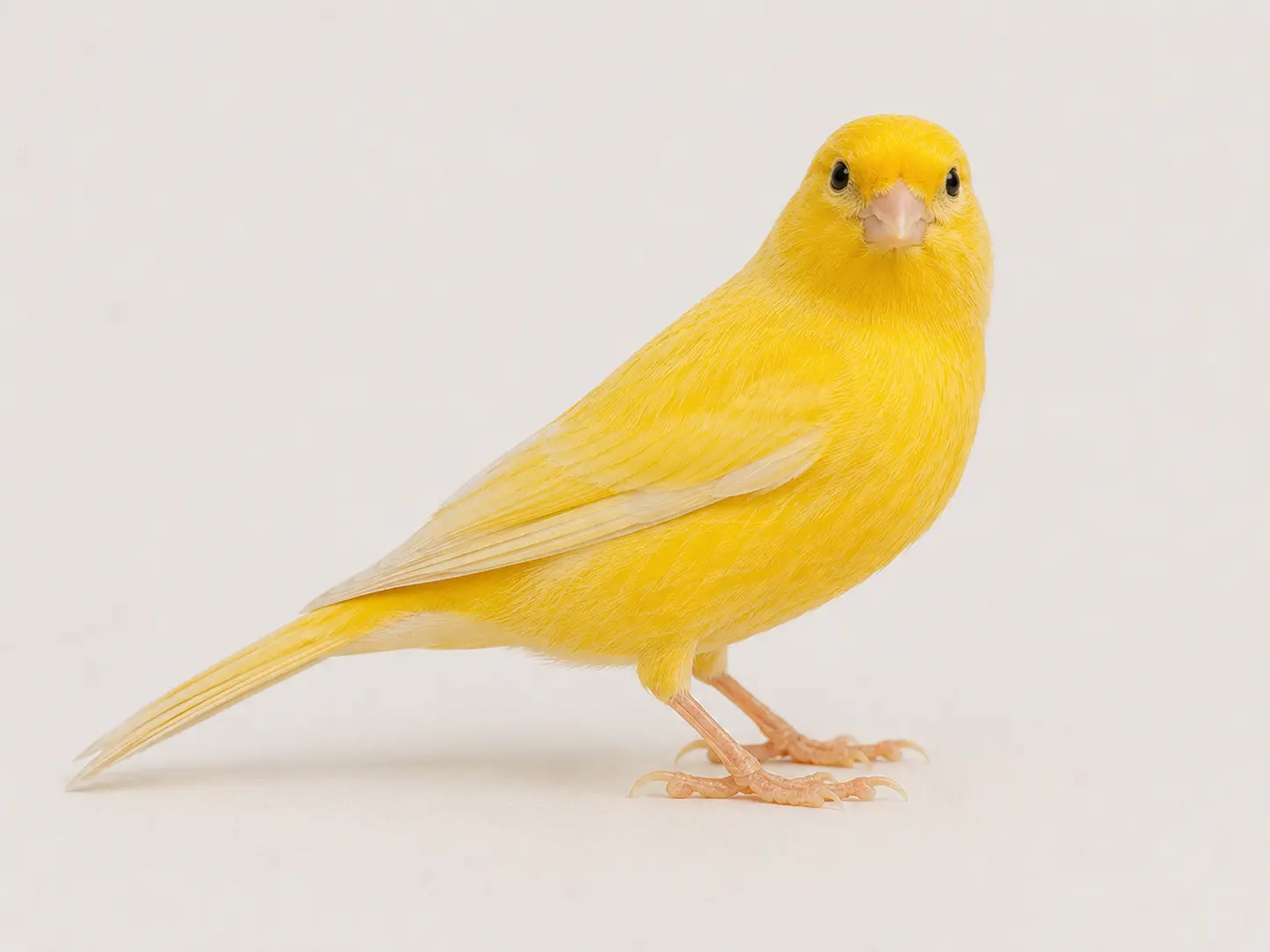




Everything you need to know about the Domestic Canary
The Domestic Canary has been bred for generations for its song, colors and different physical characteristics. Small in size but highly active, it needs an environment that allows it to fly, explore and express natural behaviors. Before welcoming a canary, it is useful to understand its needs regarding space, diet, hygiene and a calm environment.
A domestic bird with many varieties
The Domestic Canary descends from wild canaries native to eastern Atlantic archipelagos. Captive selection has gradually produced numerous lines and varieties.
Some canaries are primarily selected for song, while others are bred for color, plumage or physical characteristics. Two birds simply described as canaries may therefore look and behave somewhat differently.
When choosing a bird, knowing its variety and the type of selection behind its line helps you understand what the breeder is seeking to preserve or develop.
The Canary’s song
Song is one of the best-known characteristics of the Domestic Canary. Males are generally the more accomplished singers, although vocal ability can vary considerably between individuals.
Song is not necessarily constant throughout the year. Age, molting, environment, stress and the bird’s general condition can all affect vocal activity.
If song is an important consideration for you, discuss the bird and its line with the breeder rather than assuming that all canaries sing in the same way.
Housing designed for flight
Canaries primarily move by flying from one point to another. Their housing should therefore provide enough space for short flights and should not be so cluttered that movement becomes difficult.
A rectangular cage offering useful horizontal space is generally more suitable than a narrow design focused mainly on height.
Whenever possible, providing more space increases opportunities for movement and makes it easier to organize separate areas for resting, feeding, bathing and activity.
Perches and cage setup
Perches allow a canary to move, rest and adopt different positions. Several appropriate diameters and textures can provide more varied footing than an enclosure equipped only with identical perches.
They should be arranged to preserve genuine flying space between different parts of the cage and, where possible, to prevent droppings from falling directly into food or water.
Damaged accessories or items that can no longer be properly cleaned should be replaced to maintain a safe and hygienic environment.
Bathing and feather care
Many canaries enjoy bathing when provided with a suitable bird bath. Bathing forms part of their natural feather-maintenance behavior.
Bathing water should remain clean and the container should be cleaned regularly. A dirty bath should not remain available for prolonged periods.
Plumage can also provide useful information about the bird’s general condition. Significant or persistent changes in its appearance deserve careful attention.
A diet that goes beyond seeds
Seed mixtures are traditionally associated with canaries, but a diet consisting exclusively of seeds can result in nutritional imbalances.
A formulated diet suitable for canaries can provide a useful nutritional base, supplemented as appropriate with a suitable amount of seeds and compatible fresh plant foods. Dietary changes should be gradual so that the bird’s actual intake can be monitored.
Fresh water should always be available. Uneaten fresh foods should be removed before they spoil.
Cage hygiene
Feathers, seed hulls, food remains and droppings quickly accumulate in a small bird’s environment. Regular maintenance keeps the cage clean and also makes unusual changes easier to notice.
Water and food containers should be kept clean. The cage floor, perches, bath and accessories should also be maintained according to how quickly they become soiled.
The cage should be arranged so that cleaning remains straightforward and there are not numerous inaccessible areas where food waste or droppings can accumulate.
Respecting its routine and environment
A Canary benefits from a relatively stable environment with a regular rhythm of light and rest. The cage should be positioned in an area suited to everyday life without constant exposure to excessive disturbance.
Sudden environmental changes can be stressful, particularly after arrival in a new home. The first few days should allow the bird to become gradually accustomed to its surroundings.
Smoke, aerosols, irritating products and other potential sources of toxicity should be kept away from the bird’s living area.
Monitoring a Canary’s health
Daily observation is particularly useful with birds. Monitor appetite, activity, usual vocal behavior, breathing, plumage and the appearance of droppings.
Persistent behavioral changes, unusual inactivity or fluffed-up posture, altered breathing, loss of appetite or any other unexplained deterioration should be taken seriously.
If you are concerned about a canary’s health, seek advice promptly from a veterinarian experienced with birds rather than waiting for symptoms to worsen.
Questions to ask the breeder
Ask about the bird’s age, sex when known, variety, usual diet and the conditions in which it was raised.
If you are particularly interested in a canary for its song, also ask about its line and vocal characteristics rather than relying solely on appearance.
Ask about its health history, habits, housing and the breeder’s recommendations for making the transition to its new home easier.
Preparing for its arrival
Prepare the cage, perches, dishes, bath and final location before the bird arrives so that changes are limited during its first few days.
Ask what diet the bird received from the breeder. If you plan to change its diet, avoid an abrupt transition and make sure the canary continues to eat adequately.
Give it time to observe its new environment and become accustomed to the people, sounds and activities of the household before increasing interactions.
Find a Domestic Canary breeder
Prousty & Co allows you to search for Domestic Canary breeders using the country, region, city and postal-code filters available on this page.
Browse profiles and contact professionals directly to learn more about their birds, the varieties they breed, their diet and their living conditions before making your choice.