



Everything you need to know about the Ragdoll
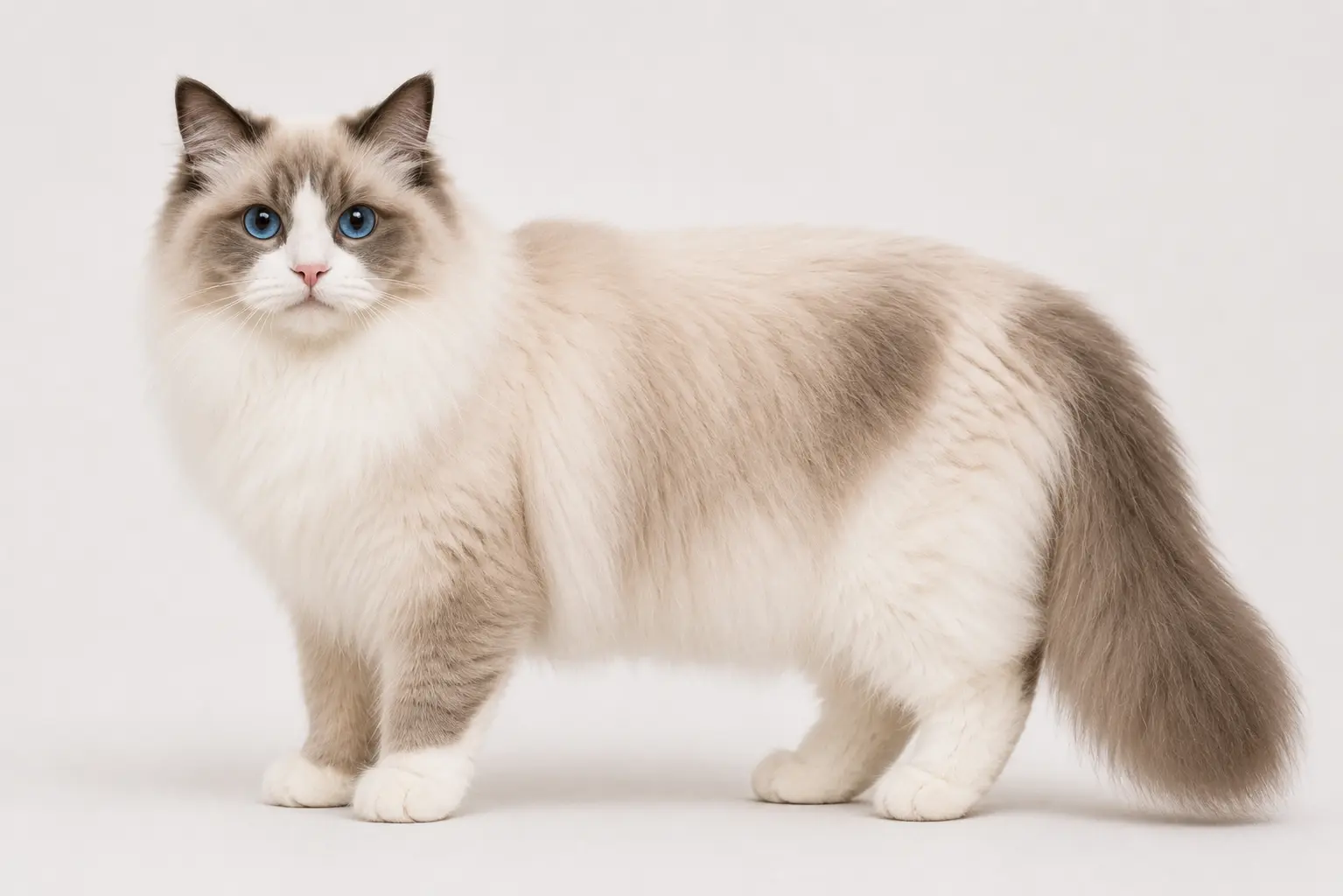
The Ragdoll combines a large build, silky semi-long coat, characteristic blue eyes and a generally peaceful temperament. Its reputation as a calm cat should not overshadow its needs: play, social interaction, coat care, weight management and health monitoring remain important throughout life.
A large, slow-maturing cat
The Ragdoll is one of the larger cat breeds. Adult males are generally more substantial than females, although weight and build can vary considerably between individuals.
Maturation is slow: a Ragdoll may continue developing size, weight and muscle for several years before reaching full maturity.
It is therefore better to monitor growth and body condition rather than aim for a specific weight. A large Ragdoll does not need to be overweight to display the breed’s characteristic build.
Blue eyes and pointed coloring
Blue eyes are one of the Ragdoll’s defining characteristics. The breed also displays pointed coloring, meaning the extremities are darker than the main body color.
Different patterns exist, including colorpoint, mitted and bicolor. Colors and markings become progressively more visible as the cat matures.
A Ragdoll kitten can therefore have a much lighter coat than it will as an adult. The development of color is a normal part of the breed’s maturation.
A generally calm and people-oriented temperament
The Ragdoll is generally known for an affectionate and relaxed personality. Many enjoy staying close to their people and quietly taking part in everyday family life.
Some enjoy being carried or sitting on laps, while others simply prefer staying nearby. The breed name therefore does not mean every Ragdoll will respond to handling in the same way.
As with all cats, temperament also depends on individual personality, early experiences, socialization and environment.
Ragdolls need play too
Its calm temperament can create the impression that a Ragdoll needs little activity. However, play remains important for stimulating natural behaviors and maintaining appropriate physical condition.
Wand toys, balls, chase toys, tunnels and searching activities can be offered regularly. Kittens and young adults are often particularly playful.
Several interactive sessions spread throughout the day combine exercise, mental stimulation and time shared with the family.
Caring for the semi-long coat
The Ragdoll has a soft, silky semi-long coat. Its woolly undercoat is relatively limited compared with some other longhaired breeds, but regular grooming is still necessary.
Weekly combing, or more often depending on the individual and season, helps remove loose hair and separate any tangles.
Introducing the kitten to combing, paw handling and other routine care makes grooming easier in adulthood.
Creating an environment suited to its size
Because the adult Ragdoll is a large cat, some standard equipment may become too small. Cat trees, platforms and beds should provide enough room and stability.
Tall scratching posts allow the cat to stretch comfortably. A sufficiently large carrier and litter box suited to its dimensions should also be provided.
The environment can combine elevated areas, hiding places, resting spaces and observation points so the cat can choose between activity and quiet time.
Nutrition and weight management
The Ragdoll’s large build should not be confused with excess weight. Body condition should remain appropriate for the cat’s build, age and activity level.
Nutritional needs change during growth and later according to activity, neutering status and body condition. Food portions should therefore be adjusted individually.
Regular weighing and body-condition monitoring help track changes. If unusual weight gain or loss occurs, a veterinarian can help investigate the cause and adjust nutrition.
Cardiac health and HCM
Hypertrophic cardiomyopathy, or HCM, is a known hereditary cardiac condition in the Ragdoll and is an important health topic to discuss with a breeder.
A DNA test is available for a mutation associated with HCM in Ragdolls. When choosing a breeder, ask which tests are performed on breeding cats and which results can be provided.
Genetic testing provides useful information about the mutation being tested, but it cannot by itself guarantee a cat’s future health. Veterinary monitoring remains important throughout life.
Kitten socialization
The affectionate temperament associated with the Ragdoll does not remove the need for thoughtful socialization. Early experiences influence how a kitten responds to people, handling and new situations.
Ask the breeder how kittens are introduced to ordinary household sounds, grooming, transport, visitors and different everyday interactions.
Gradual, respectful socialization helps the kitten develop confidence without forcing it into situations it cannot comfortably manage.
Questions to ask the breeder
Ask about the kitten’s parents, their temperament, health history and the examinations performed before they were used for breeding.
Also ask about the kitten’s diet, daily routine, grooming, socialization and habits it has already developed.
A transparent discussion helps you understand the breeder’s choices and obtain specific information about the kitten rather than relying only on general statements about the breed.
Preparing for the kitten
Before arrival, prepare a quiet space with water, food, litter, bedding, a scratching surface and several hiding places. The kitten can then gradually discover the rest of the home.
Initially keeping the same food and some familiar routines from the breeder can make the transition easier. Changes can then be introduced progressively.
From the beginning, consider equipment that can accommodate its growth, including a carrier, litter box and platforms large enough for an adult Ragdoll.
Find a Ragdoll breeder
Prousty & Co allows you to search for Ragdoll breeders using the country, region, city and postal-code filters available on this page.
Browse profiles and contact professionals directly to discuss their breeding cats, health examinations, socialization practices, kitten living conditions and support before making your choice.