
Find a dog behaviorist
A dog’s behavior depends on many factors, including its history, learning experiences, environment, interactions and health. When a reaction becomes difficult to understand or manage, a dog behaviorist can examine the situation in context and suggest support adapted to the dog and household. Prousty & Co allows you to search for canine behavior professionals and review the information available on their profiles.
What does a dog behaviorist do?
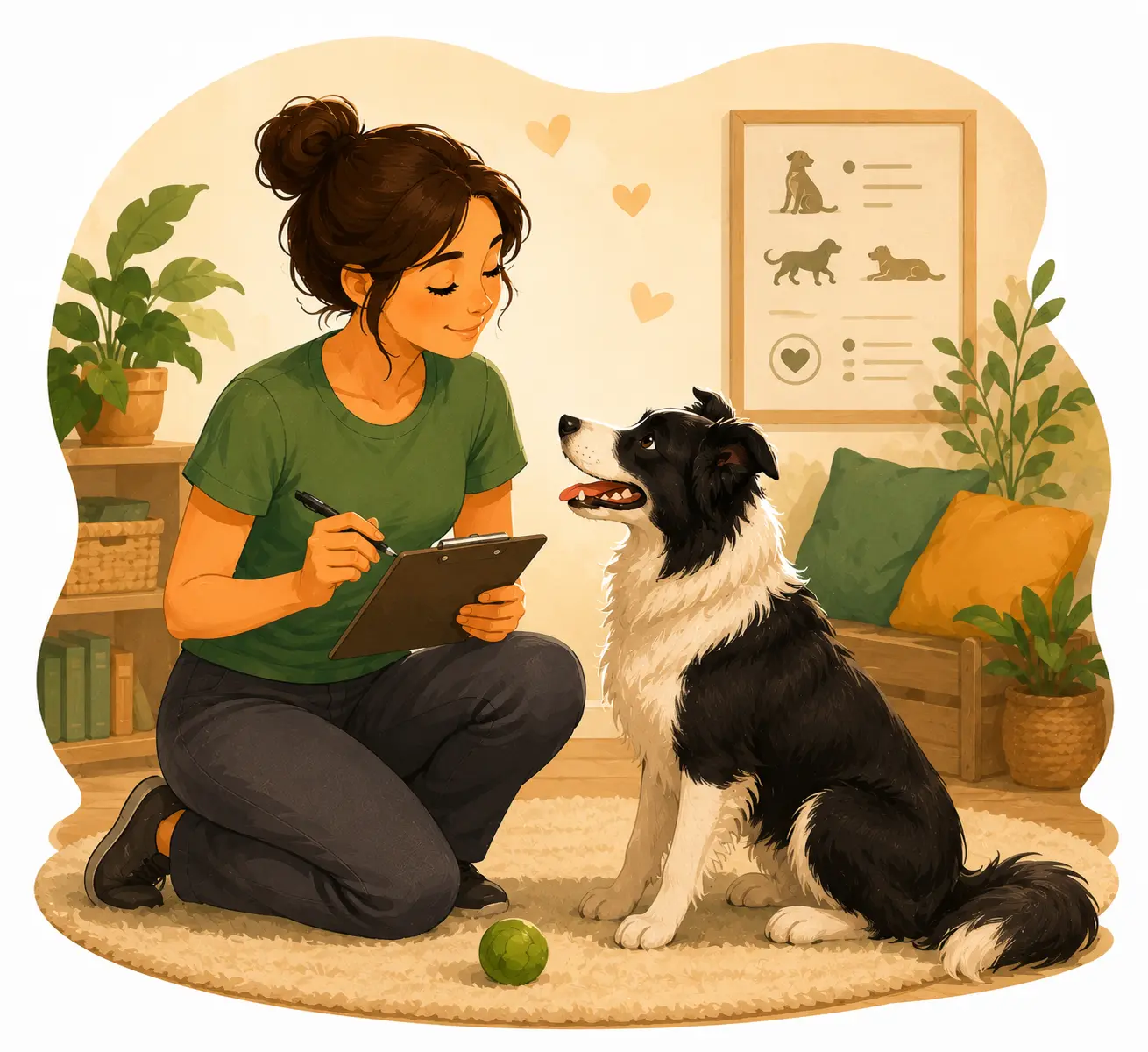
A behaviorist considers both the dog and the context in which behaviors occur. They may examine its history, daily life, environment, interactions, habits and the events that precede or follow certain reactions.
The aim is to understand the situations encountered and suggest adjustments involving the environment, interactions, learning, routines or management of particular situations.
Why consult a dog behaviorist?
Reasons vary and may include fear of certain situations, reactions toward dogs or people, difficult-to-manage barking, destructive behavior, difficulties when left alone, guarding certain resources or tension with other animals in the household.
Support may also be sought during a significant change such as moving home, the arrival of a child or another animal, recent adoption, changes in daily routine or a new household organization.
What happens during a behavior consultation?
The first step generally involves gathering detailed information about age, origin, history, known health, habits, environment, walks, activities, relationships with people and animals, and the circumstances in which difficulties occur.
The professional may then suggest management measures and gradual behavior work adapted to the situation. Follow-up sessions can help adjust recommendations according to the dog’s responses and observed progress.
Reactive dogs on walks or around certain triggers
A dog may bark, pull, growl or lunge when encountering another dog, a person, a vehicle or a particular situation. The term reactivity describes the observed response but does not, by itself, explain its cause.
The professional may identify triggering situations, the distance at which the dog begins to react and factors that influence its behavior. The environment and walks can temporarily be managed to reduce overly difficult situations while behavior work is underway.
Fear and avoidance behaviors
An anxious dog may try to move away, freeze, hide, refuse to move forward or show more obvious reactions when unable to gain sufficient distance. Understanding these signals can help avoid unnecessarily forcing the dog into a situation it is not yet able to manage.
Behavior work may include temporary management of difficult situations and very gradual exposure at a level the dog can cope with, combined with positive experiences.
Growling, biting and aggressive behavior
Growling, threatening behavior or biting should be considered in context. Fear, pain, resource guarding, frustration or unwanted proximity may be among the factors to examine depending on the situation.
When there is a bite risk, the safety of people and animals comes first. Temporarily avoiding certain situations and seeking professional help promptly allows support to begin without deliberately provoking reactions to test the dog.
Difficulties when the dog is left alone
Barking, vocalizing, destructive behavior, restlessness or elimination when household members are absent can have different explanations. Observing when these behaviors begin, how long they last and their context helps characterize the situation.
When it can be used without disturbing the dog, a camera may provide useful information about what actually happens during absences and help the professional assess the situation.
Guarding food, toys or other resources
Some dogs may stiffen, growl or try to retain a resource when a person or another animal approaches. The resource may be food, an object, a resting place or something else important to the dog.
Avoid deliberately provoking the behavior by forcibly removing the resource to test the dog’s reaction. A professional can suggest safety measures and gradual behavior work suited to the context.
Living with people and other animals
Cohabitation difficulties may occur between dogs, with another animal or during certain interactions with household members. The organization of space, access to resources, routines and close-contact situations can then be examined.
When a new animal arrives, gradual introductions and an arrangement that gives each animal space may be preferable to immediate and prolonged contact.
Which methods can be used for dog behavior support?
Behavior support may combine environmental management, teaching alternative behaviors, reinforcing desired responses and gradual progression around difficult situations.
Methods based on pain, fear or intimidation can negatively affect dog welfare and worsen some reactions. Look for a professional who can explain their methods and work without deliberately causing fear or pain.
Dog behaviorist or dog trainer?
Training commonly focuses on useful everyday skills such as recall, leash walking, waiting, settling or other behaviors. Behavior work focuses more on emotions, reactions and context when a particular difficulty is present.
In practice, some professionals provide both types of support. What matters is checking that their skills and approach are appropriate for your dog’s situation.
Dog behavior and health
Pain, illness or a change in health can sometimes influence behavior. A new reaction or sudden behavioral change should therefore not automatically be considered a purely behavioral problem.
If behavior changes suddenly, pain is suspected, unusual symptoms appear or general health deteriorates, contact a veterinarian. Depending on the situation, veterinary care and behavior support may complement each other.
How to choose a dog behaviorist
Ask about their background, experience with the issue you are facing, methods and consultation process. Ask how they assess situations and adapt support to each dog.
The professional should be able to clearly explain their methods, proposed objectives and any necessary safety measures. They should also recognize when veterinary assessment may be appropriate.
How to prepare for a behavior consultation
Note how long the difficulty has been present, the situations in which it occurs, its frequency and recent changes in the dog’s life. Also prepare information about daily routines, walks, diet, sleep, activities and known health.
If a behavior occurs naturally and can be recorded without provoking the situation or putting a person or animal at risk, a short video may sometimes help the professional understand the context.
Find a dog behaviorist on Prousty & Co
Prousty & Co allows you to search for professionals offering canine behavior support. Use the location filters to find behaviorists matching your search.
Review the information available on their profiles and contact the professional directly to learn about their approach, consultation options, service area, availability and prices.