
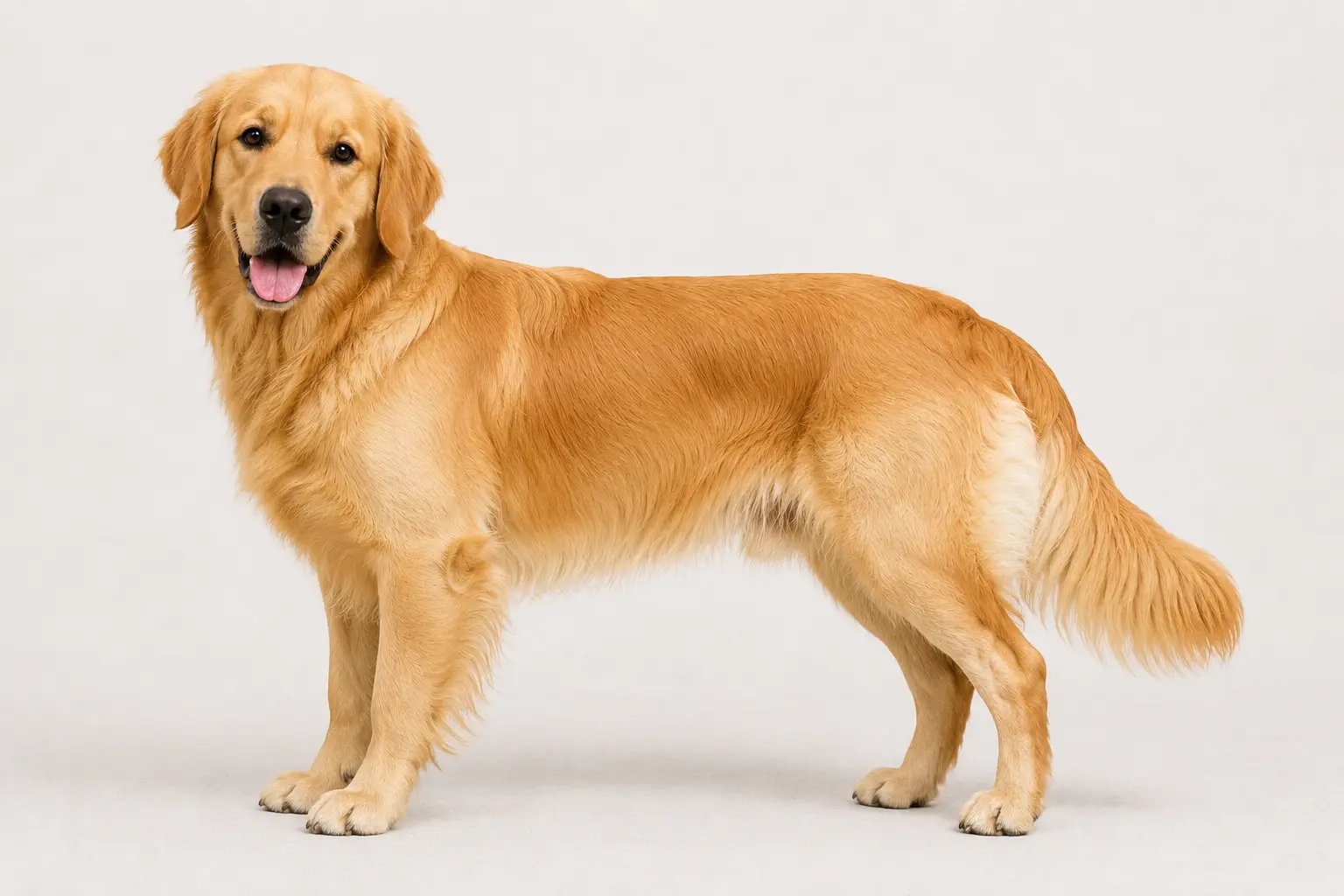




Everything you need to know about the Golden Retriever
The Golden Retriever is a retrieving dog developed for its working ability, cooperation with people and natural retrieving skills. Behind its very popular image as a family dog is therefore an active, intelligent and willing dog that enjoys interaction, learning and shared activities. Understanding both sides — family companion and retriever — helps provide a suitable daily life.
A British retriever developed for retrieving
The Golden Retriever belongs to the retriever group, dogs historically developed to locate and retrieve game after shooting. This role helps explain several characteristics still visible today: cooperation with people, interest in carrying and retrieving objects, enthusiasm for activity and an ability to work in different environments.
Even when living exclusively as a companion, activities that engage these natural abilities can enrich everyday life.
A dog oriented toward cooperation
The Golden Retriever is generally described as friendly, confident, intelligent and willing to cooperate. Many strongly enjoy human company and naturally seek interaction.
This reputation does not mean that every Golden Retriever has exactly the same personality. Genetics, early experiences, environment, learning and individual personality all influence behaviour.
Physical activity and the need to explore
The Golden Retriever is an active dog that benefits from daily outings allowing it to walk, sniff, explore and interact with its environment. Needs change with age and should be adapted to each dog’s physical condition.
Many Golden Retrievers also enjoy swimming and retrieving games. These activities should nevertheless be offered safely and without forcing an individual dog to participate in something it does not enjoy.
Retrieving, searching and problem solving
Retrieving activities can be very simple: searching for a toy, finding a hidden object or learning to bring different items on request. Scent-based exercises can also provide an interesting way to engage the dog’s abilities.
Mental stimulation does not necessarily require long or complicated sessions. A few short learning activities integrated into everyday life can provide opportunities to think and cooperate.
Training and everyday learning
Its willingness to cooperate generally makes the Golden Retriever receptive to training. Consistent reward-based education can progressively build recall, leash skills, waiting, settling and other useful everyday behaviours.
Training begins during the first weeks with simple, age-appropriate goals. It is generally easier to build desirable habits progressively than to wait until unwanted habits have become established.
Golden Retrievers, children and other animals
The Golden Retriever’s generally sociable temperament contributes to its popularity as a family dog. This never removes the need to supervise interactions with children and teach everyone to respect each other’s space and signals.
Living with other animals also depends on the individuals and their previous experiences. Gradual, supervised introductions remain preferable even with a breed known for sociability.
Coat and grooming
The Golden Retriever has a coat that requires regular care. Brushing removes some loose hair, helps prevent tangles in feathered areas and provides an opportunity to check the condition of the skin.
Ears, nails and teeth also deserve routine attention. After swimming or outings in wet or heavily vegetated areas, checking the coat and ears can help identify dirt, debris or possible irritation.
Health: information to request before adoption
When choosing a breeder, ask which examinations and health screening procedures are performed on the breeding dogs and whether the results are available for review. Recommendations may vary between bloodlines, breed organizations and countries.
Screening cannot guarantee a puppy’s future health, but it provides useful information about breeding decisions. A veterinarian can help explain the significance of a result or discuss a particular health concern.
Diet, weight and body condition
Food intake should be adapted to the dog’s age, activity level and body condition. The amount required varies between individuals and cannot be determined solely from body weight or general feeding guidelines on packaging.
Regularly monitoring weight and body condition helps identify when portions need adjustment. Seek veterinary advice in cases of unexplained weight change or particular dietary needs.
How to choose a Golden Retriever breeder
Pay as much attention to the breeding dogs as to the puppies: temperament, health, living conditions and behaviour all provide useful information. Ask how the puppies are raised, what experiences they encounter and how the breeder prepares them for leaving.
A thoughtful breeder will also want to understand your lifestyle, expectations and the environment in which the dog will live. This conversation helps determine whether the project suits a Golden Retriever and can guide puppy selection.
Preparing for a Golden Retriever puppy
Before arrival, prepare a quiet resting area, secure accessible spaces and provide the equipment needed for meals, outings, transport and initial activities.
The first weeks are mainly about progressively building habits: toilet training, sleep, handling, recall, leash walking, discovering new environments and learning to spend short periods alone.
A puppy also needs plenty of rest. Walks, games and new experiences should be adapted to development rather than based on the routine of an adult Golden Retriever.
Find a Golden Retriever breeder
Prousty & Co allows you to search for professionals offering Golden Retrievers using the country, region, city and postal-code filters available on this page.
Browse professional profiles to learn about their activity, location and the information they provide before making contact.