
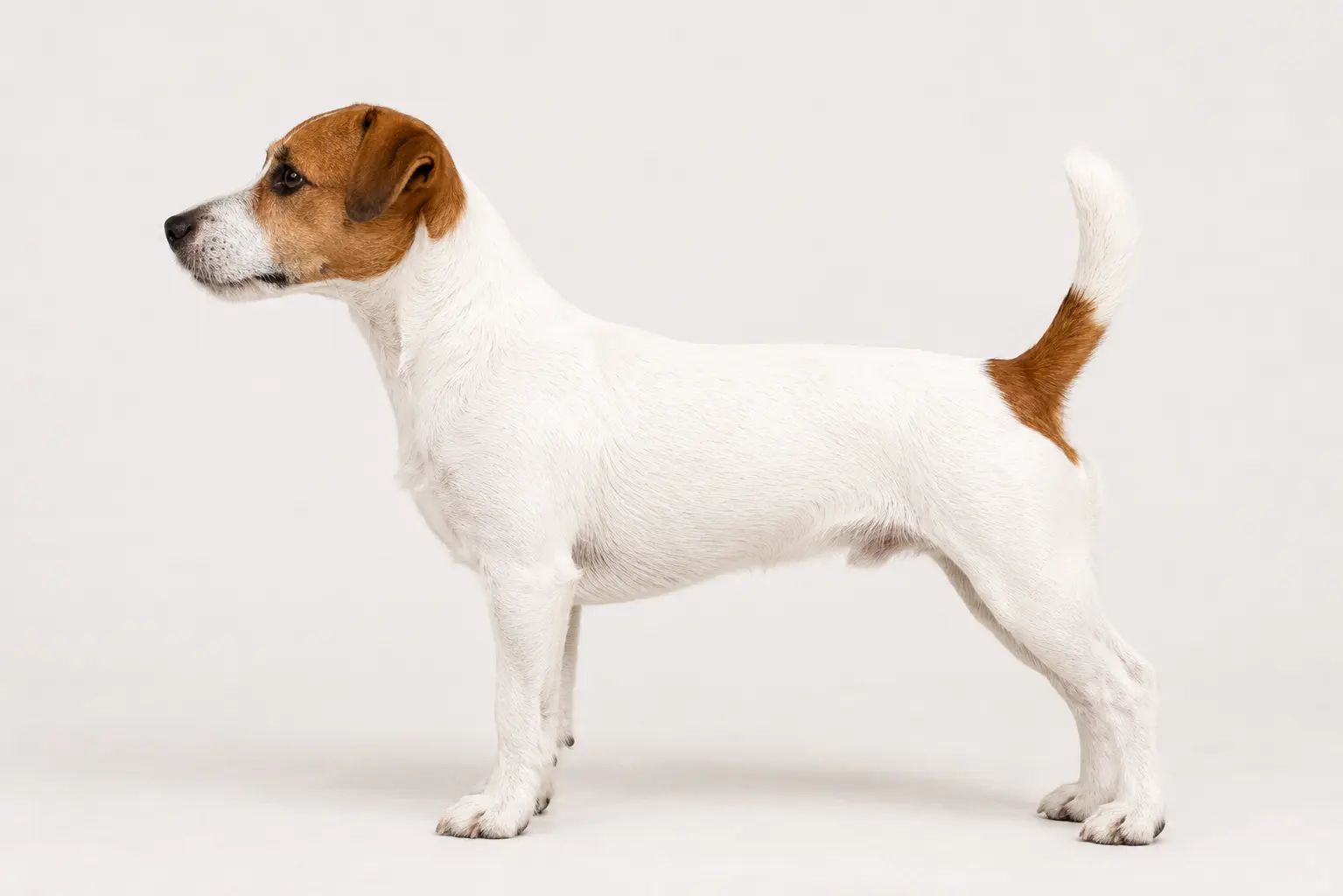




Everything you need to know about the Jack Russell Terrier
The Jack Russell Terrier is a small dog with a particularly active temperament. Developed from working terriers, it combines curiosity, liveliness, intelligence and determination. Its compact size can suit different living environments, but it does not reduce its need for activity, exploration, learning and interaction. Before welcoming one, it is important to look beyond its size and understand the daily commitment involved.
A terrier with working-dog origins
The Jack Russell Terrier originated in nineteenth-century England from terriers developed by Reverend John Russell. The aim included producing dogs active and agile enough to accompany hunts and capable of working underground.
The breed was later developed extensively in Australia. Today’s Jack Russell retains its compact build, liveliness and several behavioural traits associated with its working-terrier history.
A small dog with a big personality
The Jack Russell is generally very aware of what is happening around it. Curious and enterprising, it may quickly become interested in movement, scents, sounds or something worth investigating.
This liveliness can be very rewarding for someone who wants to share many activities with their dog. It also means gradually teaching the dog to settle, cope with frustration and return to its handler despite distractions.
Chasing instinct and environment
Its terrier heritage can result in a strong interest in chasing, scents, small animals and exploring holes or underground spaces. The intensity varies considerably between individual dogs.
Recall therefore deserves progressive training in secure environments. When recall is not sufficiently reliable, an appropriate leash or long line can provide greater control while still allowing opportunities to explore.
Physical exercise and mental stimulation
Daily walks are important, but they are only one part of the activities available to a Jack Russell. Scent exploration, object searches, learning new behaviours, interactive games and suitable dog activities can enrich everyday life.
The goal is not to continually increase physical exercise simply to tire the dog out. Alternating activity, problem solving, exploration and rest can create a more balanced routine. Intensity should always be adapted to age and physical condition.
Training: providing guidance without suppressing curiosity
Its intelligence and motivation can make training particularly rewarding. Short, consistent, reward-based sessions can be used to develop recall, leash skills, waiting, disengagement and settling.
It is also useful to reinforce desirable everyday behaviours rather than intervening only when the dog does something unwanted. Consistency between household members makes learning easier.
Living with children and other animals
Compatibility with children or other animals cannot be determined from breed alone. It also depends on the individual dog’s temperament, previous experiences, socialization and the way interactions are managed.
Around small animals, the breed’s terrier heritage and potential interest in chasing should be considered. Introductions should be gradual, controlled and adapted to the individuals involved.
Smooth, broken or rough coat: what care is needed?
The Jack Russell standard recognizes several coat textures: smooth, broken and rough. Grooming needs can therefore vary somewhat depending on coat type.
Regular brushing helps remove loose hair and provides an opportunity to check the skin. Nails, ears and teeth also deserve routine attention. For coats requiring particular maintenance, a groomer experienced with terriers can advise on suitable techniques.
Health: what should you ask the breeder?
Before choosing a breeder, ask which health screening procedures are performed on the breeding dogs and which results are available for review. Recommendations may vary according to breed organizations, bloodlines and countries.
Screening can never guarantee a puppy’s future health on its own, but it provides useful information about breeding practices. Ask a veterinarian for help interpreting screening results or discussing an individual dog’s health risk.
How to choose a Jack Russell Terrier breeder
Take time to learn about the breeding dogs, their temperament, health and living conditions. Also consider the environment in which the puppies are raised and ask which socialization experiences they receive before leaving.
A discussion with the breeder should also include an open conversation about the breed’s temperament and activity level. Choosing a puppy should not be based solely on appearance, sex or coat type.
Preparing for a Jack Russell puppy
Before the puppy arrives, secure the areas it will have access to and prepare a quiet resting place. A suitable leash, safe chewing options, toys and equipment for simple activities can gradually be introduced.
The first weeks are an opportunity to establish the foundations: toilet training, sleep, recall, handling, leash walking, gradual exposure to the environment and learning to spend short periods alone. Respecting rest periods is just as important as providing activity.