
Find a dog trainer
Dog training helps dogs learn useful everyday skills while helping their humans communicate with them more clearly. Recall, leash walking, waiting, housetraining, settling and managing distractions can be taught progressively according to the dog’s age, experience and environment. Prousty & Co allows you to search for dog trainers and discover the services they offer.
What does a dog trainer do?
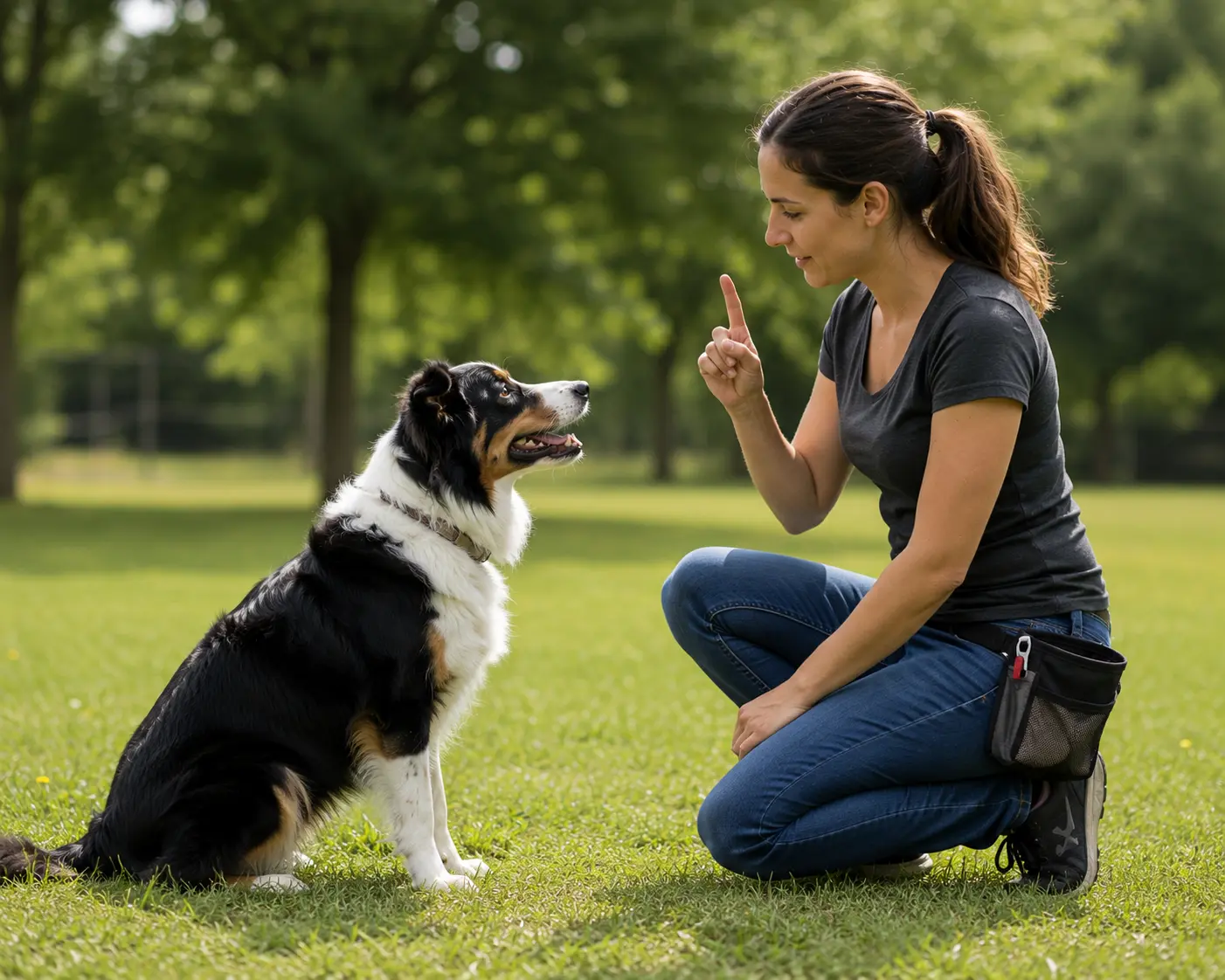
A dog trainer supports dogs and their humans in learning useful everyday behaviors. The trainer observes how they work together, explains exercises and helps establish a progression the dog can understand.
An important part of the work is also teaching the human when to reward, how to organize a session, how to gradually increase difficulty and how to practise the exercises in everyday life.
What can you teach with a dog trainer?
Goals may include recall, leash walking, waiting, settling, staying in a designated place, housetraining, everyday handling or responding to particular cues.
Useful skills depend on lifestyle. A dog living in a city, one that regularly accompanies its human outdoors or one living in a quieter environment will not necessarily encounter the same situations.
Teaching your dog to come when called
Recall means teaching a dog to return when called. Training generally begins in a simple situation before gradually introducing greater distance and more distractions.
Rewarding the dog when it returns helps make recall worthwhile. During training, a long line can also make it possible to practise in some environments while maintaining greater safety.
Teaching loose-leash walking
Leash walking is a learned skill: the dog needs to understand which behavior allows the walk to continue. Regularly rewarding a loose leash can help build this skill progressively.
Difficulty can then be increased in more stimulating environments. A dog that walks calmly in a quiet place may need additional practice on a busy street or around other dogs.
Teaching waiting and settling
Training is not only about active behaviors. Learning to wait for a moment, settle calmly on a mat or relax while the human is busy can be useful in many situations.
These skills are built progressively, beginning with short durations and a sufficiently simple environment before increasing duration or distractions.
Puppy training: where should you start?
With a puppy, early sessions can remain short and simple. Its name, recall, housetraining, handling, walking on a leash, settling and a few everyday rules can be introduced progressively.
The goal is not to conduct long consecutive sessions but to create many small learning opportunities in everyday life while allowing the puppy enough time to play, explore and rest.
Can an adult dog learn new skills?
Learning does not stop when puppyhood ends. An adult dog can learn new behaviors or practise existing skills in new situations.
When a dog has recently joined a new household, beginning with simple goals can also help progressively establish habits suited to the new environment.
Why use rewards during training?
Rewarding a behavior you want to see again helps the dog understand what is expected. Depending on the dog and situation, rewards may include food, a toy, interaction or access to an activity the dog enjoys.
The goal is not necessarily to use the same reward forever. As learning becomes more established, the type and frequency of rewards can evolve while maintaining the dog’s motivation.
Why does a dog respond at home but not outside?
A skill learned in the living room is not automatically mastered in every environment. Outdoors, scents, people, dogs, noises and movement can make the exercise much more difficult.
It is therefore useful to progressively practise the same skills in different places while adjusting difficulty. This generalization is an integral part of learning.
Private or group dog training?
A private session allows more focused work on household goals and, in some cases, directly within the dog’s everyday environment. Group sessions allow practice around other dogs and people when that setting is appropriate.
The most suitable format depends on the goals, the dog and its comfort in the proposed setting. Some professionals combine both formats during training.
Which dog training methods should you choose?
A reward-based approach focuses on teaching the dog what to do and reinforcing desired responses. The environment can also be arranged to facilitate learning and avoid unnecessarily placing the dog in situations where it is likely to fail.
Methods based on pain, fear or intimidation are not necessary for teaching everyday skills. When choosing a trainer, ask which methods and equipment they use and how they reward desired behaviors.
Dog trainer or dog behaviorist?
A trainer primarily works on learning and useful everyday skills. A behaviorist focuses more on problematic or difficult-to-manage reactions, their context and factors that may influence them.
Some professionals work in both areas. For situations involving significant fear, aggressive responses, biting or complex behavioral difficulties, look for a professional with appropriate experience in these issues.
When should you seek veterinary advice?
A learning difficulty is not always caused by a lack of training. Pain, discomfort or a health problem can sometimes affect a dog’s ability to engage, mobility or responses.
If behavior changes suddenly, pain is suspected, physical difficulty appears or unusual symptoms occur, consult a veterinarian to assess the situation.
How to choose a dog trainer
Ask the professional to explain their methods, equipment, session structure and how exercises are adapted to each dog. You should be able to understand what will be taught and why.
Also ask about their experience, the types of support offered and how they refer clients to another professional when a situation falls outside their area of expertise.
Preparing for a first dog training session
Before the appointment, identify two or three concrete goals, such as improving recall, making walks easier, teaching the dog to wait or working on another everyday situation. This helps establish realistic priorities.
Ask the professional what to bring, such as a leash, long line, harness, rewards or other equipment. Also mention any particular difficulty that could affect the session.
Find a dog trainer on Prousty & Co
Prousty & Co allows you to search for dog trainers offering private sessions, group classes or other training formats. Use the location filters to find professionals matching your search.
Review the information available on profiles and contact the professional directly to learn about their methods, available sessions, service area, availability and prices.