
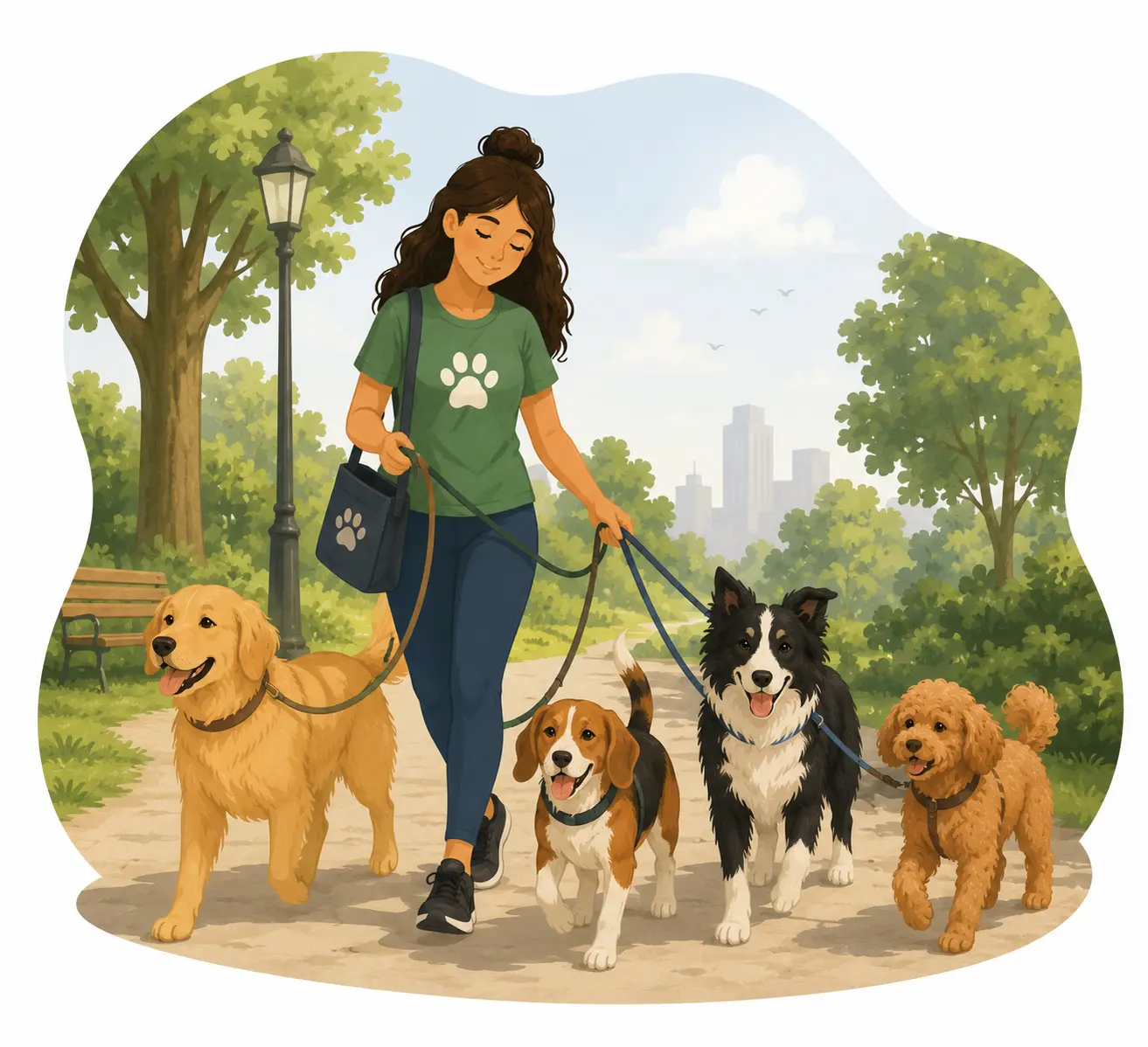
Find a dog walker
Using a dog walker makes it possible to arrange an outing when you are away, busy or simply when your dog needs an additional walk. The professional may provide occasional or regular walks and adapt the route, pace and duration to the dog’s habits. Prousty & Co allows you to search for professionals offering dog walking services.
What does a dog walking service include?
The dog walker takes care of the dog for an agreed period and provides a suitable outing. Depending on the service, the walker may collect the dog directly from home, complete the walk and return the dog afterwards.
Arrangements vary between professionals, including walk duration, frequency, service area, solo or group walks, possible transport and additional services. These details can be agreed before the first booking.
Why use a dog walker?
A dog walking service can be useful during a working day, an occasional absence, a particularly busy period or whenever the household schedule makes it difficult to provide every usual outing.
Some owners also use a dog walker regularly to add an extra outing during the week. Frequency then depends on the dog, its lifestyle and the household schedule.
Adapting the walk to each dog
Dogs do not all have the same needs or abilities. Age, physical condition, habits, temperament, health and environment influence the type of outing that may be appropriate.
A highly active young dog and an older dog with a slower pace will not necessarily be walked in the same way. The professional should have the information needed to adapt the outing to the dog in their care.
A walk is about more than distance
Walking allows a dog to move around but also to explore its environment. Sniffing, observing and discovering different scents are part of normal canine behavior.
Depending on the dog, a calm outing with time to explore can therefore be just as relevant as a faster-paced walk. The content of the outing can be adapted to the goal and the dog’s preferences.
When is a solo dog walk suitable?
A solo walk allows the professional to focus on one dog and more easily adjust pace, route and interactions encountered during the outing.
This format may be useful when a dog has particular routines, needs a specific pace or is not comfortable walking with several other dogs.
How do group dog walks work?
Some dog walkers organize outings with several dogs. Before joining a group, the professional may consider temperament, size, activity level, habits and the dog’s responses around other dogs.
Ask how many dogs are walked at the same time, how groups are formed, how dogs are transported when a vehicle is used and how interactions are managed during the outing.
How long should a dog walk last?
There is no single walk duration suitable for every dog. Duration and intensity should be adjusted to the individual dog rather than determined solely by a standard number of minutes.
A professional can discuss your dog’s routines with you and adjust outings according to age, activity level and abilities. If your dog has a health condition or you are unsure about appropriate exercise, ask your veterinarian for advice.
Adapting walks to the weather
Temperature, humidity and sun exposure can change walking conditions. In hot weather, route, timing, duration and intensity may need to be adjusted.
The walker should also know the particular needs of the dog in their care. Some dogs may be more vulnerable to problems related to heat or exertion; if there is doubt about health or ability to exercise, veterinary advice is appropriate.
What information should you give the dog walker?
Before the first walk, explain your dog’s routines, including equipment used, usual pace, responses to dogs or people, situations the dog enjoys or prefers to avoid and any particular instructions.
Also provide any relevant health information, contact details and instructions for unexpected situations. Clear information helps provide consistent care from the first outings.
Keys and home access
When the walker collects your dog from home while you are away, clearly agree on access arrangements. Ask how keys or other means of access are stored and identified by the professional.
Also explain which areas the dog can access, where equipment is kept and any instructions concerning doors, gates or other access points.
Keeping track of your dog’s walks
Some professionals send a message, photograph or report after the outing. This can help you know how the walk went and highlight anything unusual.
You can agree in advance on the level of information you would like and how the professional should contact you if a problem occurs while the dog is in their care.
How to choose a dog walker
Talk with the professional about their experience, organization, number of dogs handled simultaneously, types of walks offered and how they adapt to different dogs.
Also ask how unexpected situations, difficult weather conditions, encounters with other dogs, possible transport and communication with the owner are handled.
Arrange a first meeting
A first meeting allows you to introduce your dog, routines and equipment to the professional. It can also provide an opportunity to observe their first interactions before arranging walks.
Use this meeting to clarify schedules, desired duration, starting point, walking routines, particular instructions and how you would like to receive updates after each outing.
Find a dog walker on Prousty & Co
Prousty & Co allows you to search for professionals offering dog walking services. Use the location filters to find providers matching your search.
Review the information available on profiles and contact the professional directly to learn about available walking formats, service area, availability, prices and care arrangements.