Find a pet grooming salon
Pet grooming includes a range of services designed to maintain an animal’s coat and hygiene. Depending on species, coat type, age and individual needs, a salon may offer brushing, detangling, bathing, drying, trimming, clipping or nail care. Prousty & Co allows you to search for grooming professionals and compare available services.
What services can a grooming salon offer?
Services vary according to the salon and the animals accepted. They may include brushing, detangling, bathing, drying, trimming, clipping, maintenance of specific coat areas or nail trimming.
Not every service is necessary for every animal. Coat type and condition, grooming habits and individual characteristics help the professional suggest an appropriate service.
Grooming depends on coat type
Short, long, dense, curly, double coats or coats requiring regular trimming do not all need the same grooming techniques or frequency.
The professional can assess coat condition before starting and determine what can be done without causing unnecessary discomfort or pulling. Regular grooming can help reduce loose hair buildup and mat formation.
Brushing and detangling
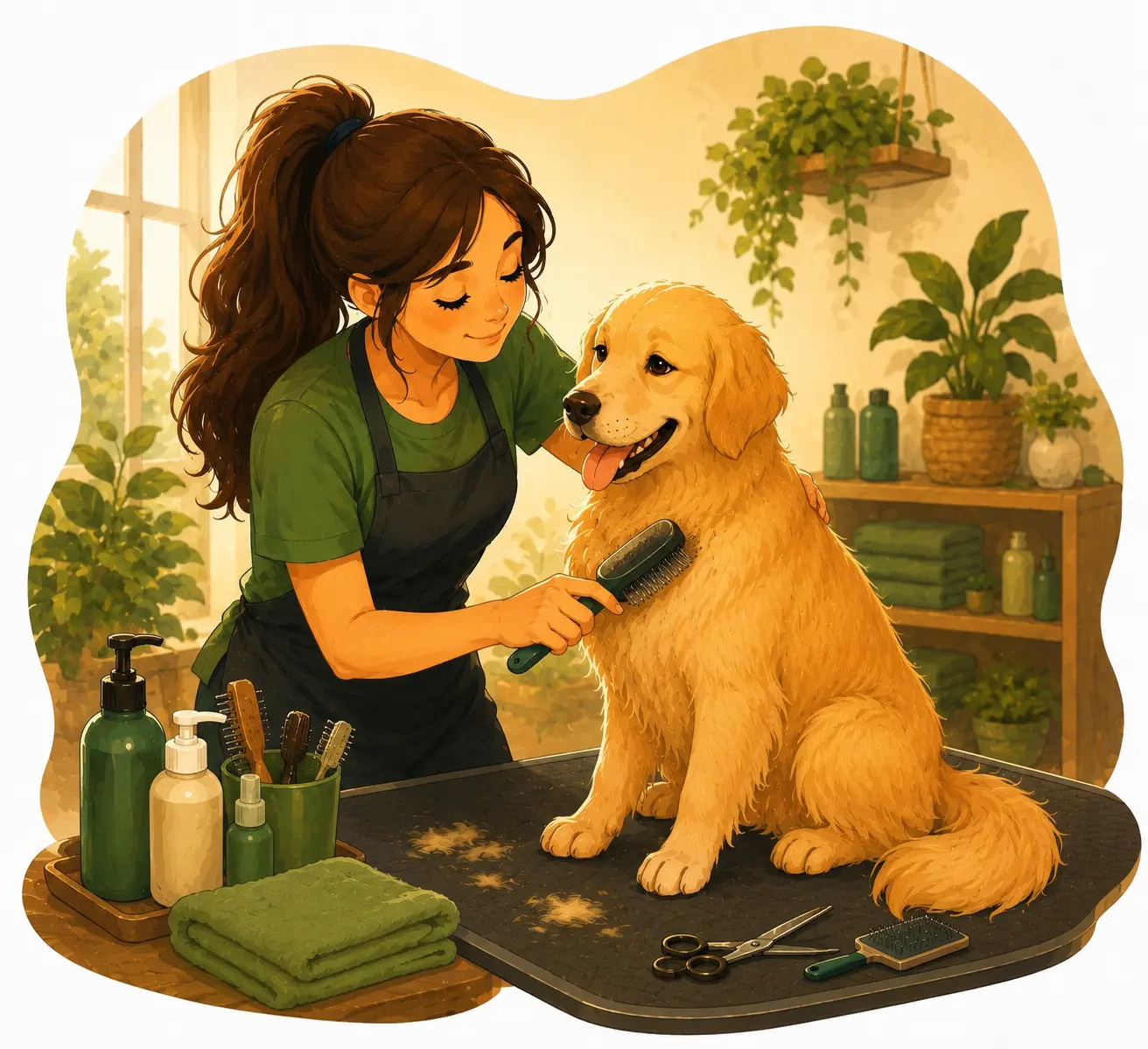
Brushing helps remove loose hair, separate the coat and identify tangled areas more easily. Tools should be appropriate for the coat type and the animal’s sensitivity.
When a coat is heavily tangled or matted, prolonged detangling can become uncomfortable. The groomer can discuss the most appropriate option with the owner according to the coat’s condition.
Bathing, shampoo and drying
Bathing may be part of a grooming service when appropriate for the animal. The product used, water temperature and drying method should take account of species, coat and individual sensitivity.
Tell the groomer about known skin reactions, particular sensitivities and products your animal does not tolerate well. If a veterinarian has prescribed a particular product or protocol, mention it before the appointment.
Trimming, clipping and coat finishing
Trimming may meet maintenance or comfort needs or achieve a desired appearance. The chosen technique nevertheless depends on coat type and condition.
Before the appointment, explain the result you would like and ask the groomer what is appropriate for your animal. A photo can sometimes help communicate an aesthetic preference, although the result also depends on the available coat and its condition.
Nail care
Some salons also offer nail trimming or maintenance. The required frequency varies according to the animal, activity level, walking surfaces and nail growth.
If the nails show an abnormality, injury, inflammation or cause significant discomfort, seek veterinary advice rather than treating the issue as a routine grooming need.
Not every animal experiences grooming the same way
Some animals are accustomed to brushing, dryer noise and handling, while others may be worried or need more time. Tell the professional about your animal’s usual behavior and any known sensitivities.
A first session can also allow the groomer to observe the animal’s responses and adapt the service. The goal should not be to complete a procedure at all costs if the animal shows significant signs of fear, pain or distress.
Grooming senior or vulnerable animals
A senior animal, an animal with reduced mobility or one that struggles with certain positions may require a different session. Inform the salon when booking so the professional can tell you whether they can accommodate the animal.
Breaks, session duration and handling can be adapted where possible. If the animal has known pain or a medical condition, ask your veterinarian which precautions should be followed.
How to prepare for a grooming appointment
When booking, provide the animal’s species, size, coat type, desired service and current coat condition. Also mention significant matting, handling difficulties or particular reactions observed previously.
Mention known health problems, current treatments, allergies or sensitivities that could affect the session. This information helps the professional determine whether the service can be provided under suitable conditions.
How to choose a grooming salon
Check which animals the professional accepts, the services offered and their experience with your animal’s coat type. You can also ask how a session is conducted and how the salon adapts when an animal becomes worried or difficult to handle.
The general condition of the salon, equipment maintenance, reception conditions and the way the professional communicates with you are also useful factors when choosing an establishment.
Salon hygiene and equipment
A grooming salon uses brushes, combs, clippers, tables, bathing equipment and other tools every day. Equipment maintenance and cleaning of areas between animals contribute to appropriate reception conditions.
You can ask the professional about equipment cleaning practices, products used and how animals are supervised during the different stages of grooming.
Grooming can also reveal an abnormality
While handling and observing the coat, a groomer may notice an irritated area, lump, wound, unusual hair loss or particular sensitivity. Their role is to tell you what they observe, not to make a diagnosis.
Persistent irritation, a lesion, significant itching, unusual hair loss or pain should be assessed by a veterinarian.
Pet grooming and veterinary care
Grooming concerns an animal’s maintenance and hygiene. It does not replace veterinary consultation, and a groomer’s role is not to diagnose or treat disease.
If your animal has a known skin condition, wound, suspected infection, pain or an unusual change in general condition, seek veterinary advice to determine appropriate care.
How often should a pet be professionally groomed?
There is no single grooming frequency suitable for every animal. It depends on species, coat type and length, shedding, lifestyle, home maintenance and the service required.
A groomer can suggest a maintenance schedule after seeing your animal and its coat. Between appointments, brushing and appropriate home care can help keep the coat in good condition.
Find a grooming salon on Prousty & Co
Prousty & Co allows you to search for professionals offering salon-based pet grooming services and review available information about their services.
Review profiles and contact professionals directly to learn which animals they accept, services offered, prices, availability and appointment arrangements.