



Everything you need to know about the American Guinea Pig
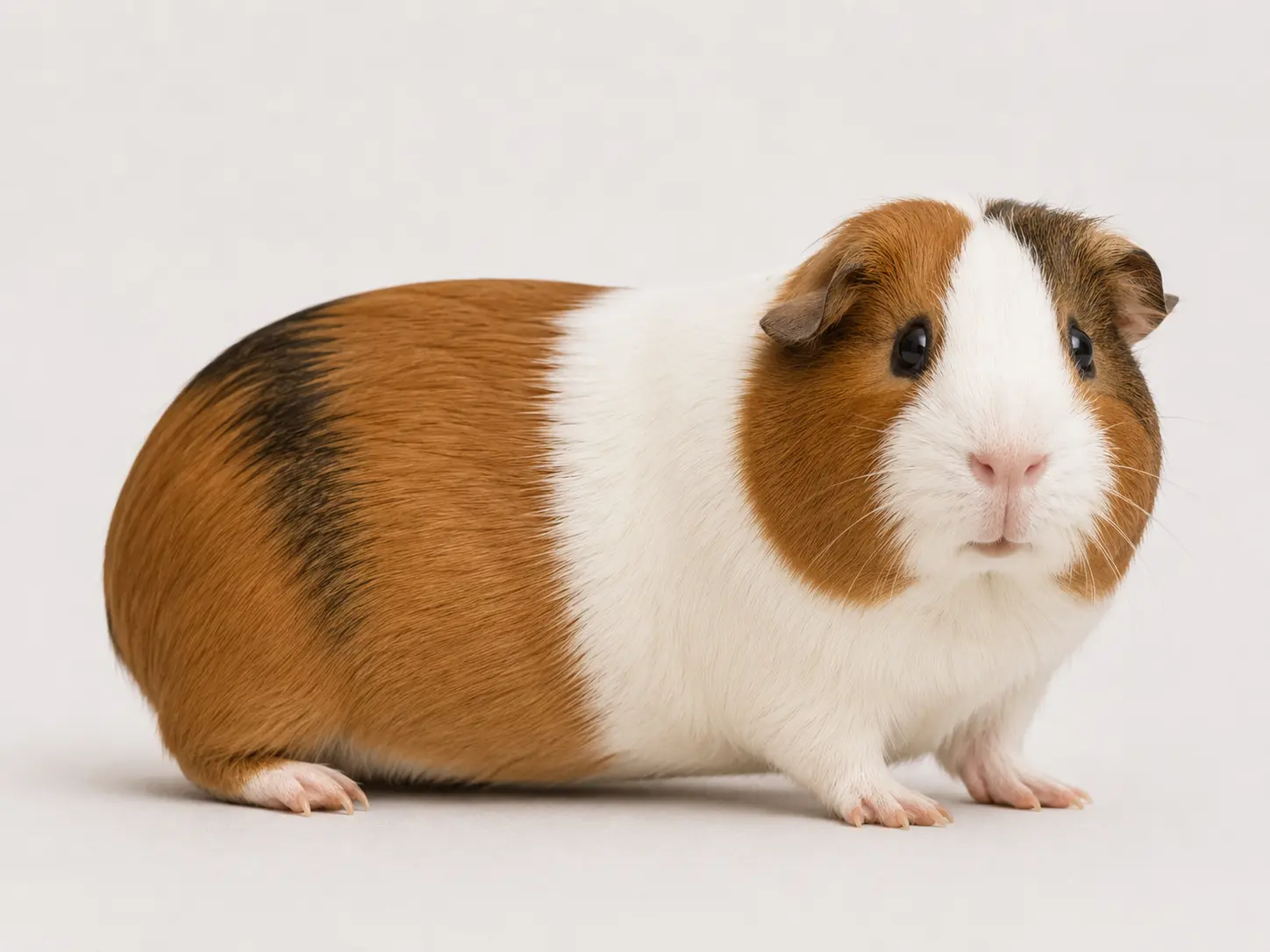
The American Guinea Pig is distinguished above all by its short, smooth coat, which requires relatively little grooming. However, simple coat care should not overshadow the needs shared by all guinea pigs: social companionship, sufficient space, a high-fiber diet, daily dietary vitamin C, hiding opportunities and regular health monitoring.
A short-haired guinea pig
The American Guinea Pig has a short, smooth coat that lies close to the body. This distinguishes it from long-haired, curly-coated or rosetted varieties.
Its coat generally requires little grooming. Regular checks are still useful for identifying dirt, irritation, areas of hair loss or other skin changes.
A variety of colors and patterns can occur. Coat appearance does not, however, predict an individual guinea pig’s temperament.
A social and communicative animal
Guinea pigs use many vocalizations and behaviors to communicate. Over time, owners often learn to recognize sounds associated with feeding, excitement or social interaction.
The presence of a compatible companion provides interactions that people cannot completely replace. Group composition should nevertheless be planned to prevent unintended breeding and encourage stable relationships.
Every guinea pig has an individual temperament. Some become confident quickly, while others need more time before feeling comfortable.
Housing designed around floor space
For guinea pigs, available floor space is particularly important. Housing should allow them to walk, run, move between areas and easily access their resources.
The floor should be solid, stable and comfortable. Wire flooring under the feet is unsuitable and can contribute to injuries and foot problems.
Housing should also be well ventilated and positioned away from excessive temperatures, strong drafts and constant sources of stress.
Hiding places and enrichment
Guinea pigs are prey animals and need to be able to take cover quickly when they feel uncertain. Several hiding places allow animals to use the space without constantly having to share the same shelter.
Tunnels, shelters with multiple openings and opportunities to search for food can enrich their environment without requiring complex structures.
Items provided should be stable, nontoxic and free from components that could cause injury or be swallowed.
Hay at the center of the diet
For adult guinea pigs, good-quality grass hay should remain available at all times. It provides essential fiber for digestive function and encourages prolonged chewing.
This chewing is particularly important because guinea pig teeth grow continuously. Appropriate nutrition therefore supports both digestive function and normal dental wear.
Hay should remain clean, dry and easily accessible. Its quality and daily consumption are important parts of routine care.
Why vitamin C is essential
Unlike many mammals, guinea pigs cannot produce sufficient vitamin C themselves. They therefore need a regular dietary source.
Pellets specifically formulated for guinea pigs and suitable vitamin-C-rich vegetables can help meet this requirement. Vitamin C in food can deteriorate during storage, making product freshness important.
Routine addition of vitamin C to drinking water is not a good solution: it is unstable in water and can alter its taste. If there is uncertainty about diet or the needs of an individual animal, a veterinarian can advise on appropriate supplementation.
Gradual dietary transitions
Guinea pigs can develop strong food preferences. When moving to a new home, it is useful to know exactly what diet was previously being offered.
Major changes in pellets, hay or fresh produce should be introduced gradually whenever possible to allow the digestive system time to adapt.
A marked reduction in appetite or refusal to eat should not simply be considered fussiness. Persistent loss of appetite in a guinea pig requires prompt attention.
Handling and building trust
A guinea pig may become worried when a hand suddenly approaches from above. Slow, predictable approaches generally help reduce stress.
When being carried, the body should be properly supported, particularly the hindquarters. Handling close to the ground also reduces the consequences of an accidental fall.
Trust develops gradually. Food, voice and calm interaction often help guinea pigs associate people with predictable and positive experiences.
Monitoring teeth, nails and weight
Regular monitoring makes changes easier to detect. Periodically weighing a guinea pig can reveal weight loss that may not be immediately visible beneath the coat.
Nails should be checked and trimmed when necessary. Teeth also require particular attention because of their continuous growth.
Reduced appetite, difficulty eating, drooling, changes in feces, abnormal breathing or weight loss warrant prompt advice from a veterinarian experienced with guinea pigs.
Questions to ask before adoption
Ask about the guinea pig’s age and sex, current diet, health history and any available information about its parents.
Also ask about its social history: does it already live with another guinea pig, which individuals has it been raised with and how does it respond to handling?
This information is particularly useful if you already have a guinea pig and are preparing for a future introduction.
Preparing for arrival
Before the guinea pig arrives, fully prepare its housing with hay, fresh water, several hiding places, a comfortable area and the food it is already accustomed to.
The first few days should allow gradual exploration of the new environment. Avoid immediately introducing numerous handling sessions and dietary changes.
If another guinea pig already lives in the home, prepare the introduction and future shared housing rather than immediately placing the newcomer into the resident animal’s established space.
Find an American Guinea Pig breeder
Prousty & Co allows you to search for breeders offering American Guinea Pigs using the country, region, city and postal-code filters available on this page.
Browse profiles and contact professionals directly to discuss their animals, housing conditions, diet, socialization and the routines of young guinea pigs before making your choice.