
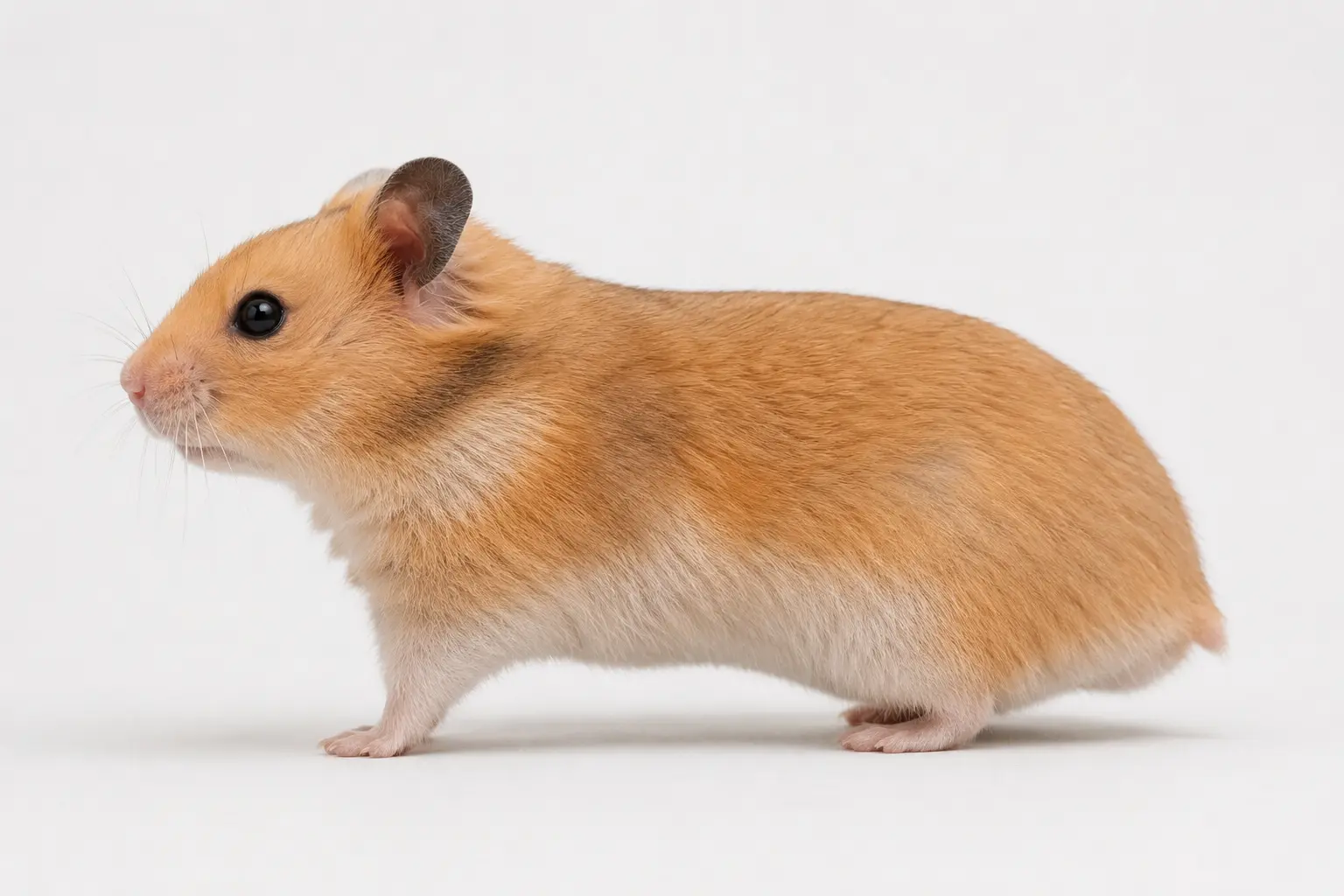




Everything you need to know about the Syrian Hamster
The Syrian Hamster, also known as the golden hamster, has needs that are often underestimated. In the wild, it uses burrows for sleeping, storing food and building a nest. In captivity, sufficiently spacious housing, deep bedding, opportunities to explore and respect for its nocturnal rhythm are essential for allowing natural behavior.
From golden hamster to companion animal
The Syrian Hamster belongs to the species Mesocricetus auratus. In the wild, its range is restricted to part of the Middle East, particularly around the Aleppo plateau in Syria.
Most domestic Syrian Hamsters today descend from a very small number of animals collected near Aleppo in 1930. The species subsequently became widespread as a laboratory animal and later as a companion animal.
The wild coloration gave rise to the name golden hamster, but selective breeding in captivity has produced many colors and several coat types.
A hamster that generally lives alone
Adult Syrian Hamsters are territorial. Permanently housing several adults in the same enclosure can lead to chasing, fighting and injuries.
For a companion animal, individual housing is therefore the safest option. Living alone does not mean that the hamster should have an empty environment: it needs many opportunities to dig, explore, forage and organize its territory.
Breeding is a specific situation requiring appropriate knowledge and careful supervision. It should not be confused with everyday cohabitation between adults.
Respecting its nocturnal rhythm
Syrian Hamsters generally sleep through much of the day and become active as the day ends. This is when they explore, search for food, use their wheel and reorganize their enclosure.
Regularly waking a hamster during its resting period can disrupt its rhythm and encourage defensive reactions. Interaction is easier when it takes place as the hamster naturally wakes.
This schedule should be considered before adoption, particularly when the animal is intended for a child: the hamster may not be available for interaction at the times the family would prefer.
Burrowing is a fundamental need
Burrowing is part of the Syrian Hamster’s natural behavioral repertoire. In the wild, it uses burrows to rest, build a nest and store food.
A substantial depth of suitable bedding allows digging and, when the material holds its structure, the creation of tunnels. A few centimeters of substrate at the bottom of a cage does not genuinely allow this behavior.
Available depth can vary according to the setup, but the aim should be to provide a genuine burrowing area rather than merely an absorbent layer.
Choosing suitable bedding and nesting material
Bedding should be absorbent, low in dust and safe for the animal. Paper-based materials designed for small rodents can be a suitable option.
For nest building, the hamster can be provided with shredded unprinted paper or other specifically suitable nesting materials. Fibrous materials that can wrap around limbs or be swallowed should be avoided.
Some clean nesting material and bedding can be retained during maintenance so that familiar scents are not systematically removed from the entire territory.
A wheel suited to its size
Running is an important activity for hamsters. A solid-surface wheel allows exercise during active periods without exposing the feet to gaps between bars.
The wheel should be large enough for the hamster to run in a natural position without having to strongly arch its back.
A wheel complements enrichment but does not replace available space, deep bedding, hiding places or opportunities to explore.
Cheek pouches and food storage
Syrian Hamsters have large cheek pouches that allow them to transport food. When full, these pouches can temporarily make the head and shoulders appear much wider.
Carrying and storing food are natural behaviors, so finding food reserves in certain areas of the enclosure is normal.
These stores should nevertheless be monitored, particularly when they contain fresh foods that may spoil.
Diet and foraging
A complete diet formulated for hamsters provides a more reliable nutritional basis than a mix from which the animal can select only its preferred ingredients.
Scattering part of the daily ration around different areas of the enclosure encourages foraging and can enrich daily activity.
Supplementary or fresh foods should be appropriate for the species and introduced sensibly. Fresh water should always remain available.
Taming and handling
After arrival, the hamster should first be allowed to discover its new environment and build its nest. Interaction can then be introduced gradually while it is awake and active.
Calmly presenting a hand and allowing the hamster to approach voluntarily often builds a more relaxed relationship than attempting to grab it directly.
When carrying a hamster, support the body securely and remain close to a low surface. Hamsters can be injured by falls and may bite when startled, suddenly awakened or handled uncomfortably.
Monitoring health
Regular observation helps identify changes earlier. Monitor appetite, weight, activity, breathing, coat condition, eyes, feces and the way the hamster moves.
Weight loss, a hunched posture, an unusually rough coat, difficult breathing, diarrhea or a major reduction in activity can accompany different health problems.
A sick hamster can deteriorate quickly. If concerning or persistent signs are present, promptly seek advice from a veterinarian experienced with small mammals.
Questions to ask before adoption
Ask for the hamster’s date of birth or approximate age, sex, current diet and the conditions in which it has been raised.
Ask about its temperament, response to handling and any known health problems affecting the hamster or its lineage.
A transparent professional should also be able to explain the type of diet, bedding and environment the hamster is accustomed to, helping make the transition to its new home easier.
Preparing for arrival
The enclosure should be fully prepared before arrival: deep bedding, hiding places, nesting area, water, food, wheel and enrichment should already be in place.
During the first few days, allow the hamster to explore and organize its territory. It may move bedding, create food stores and choose where to establish its nest.
Avoid immediately changing the entire enclosure layout. A quiet period makes adaptation easier before gradually beginning interaction.
Find a Syrian Hamster breeder
Prousty & Co allows you to search for breeders offering Syrian Hamsters using the country, region, city and postal-code filters available on this page.
Browse profiles and contact professionals directly to discuss their animals, lineages, breeding conditions, diet, temperament and the routines of young hamsters before making your choice.