
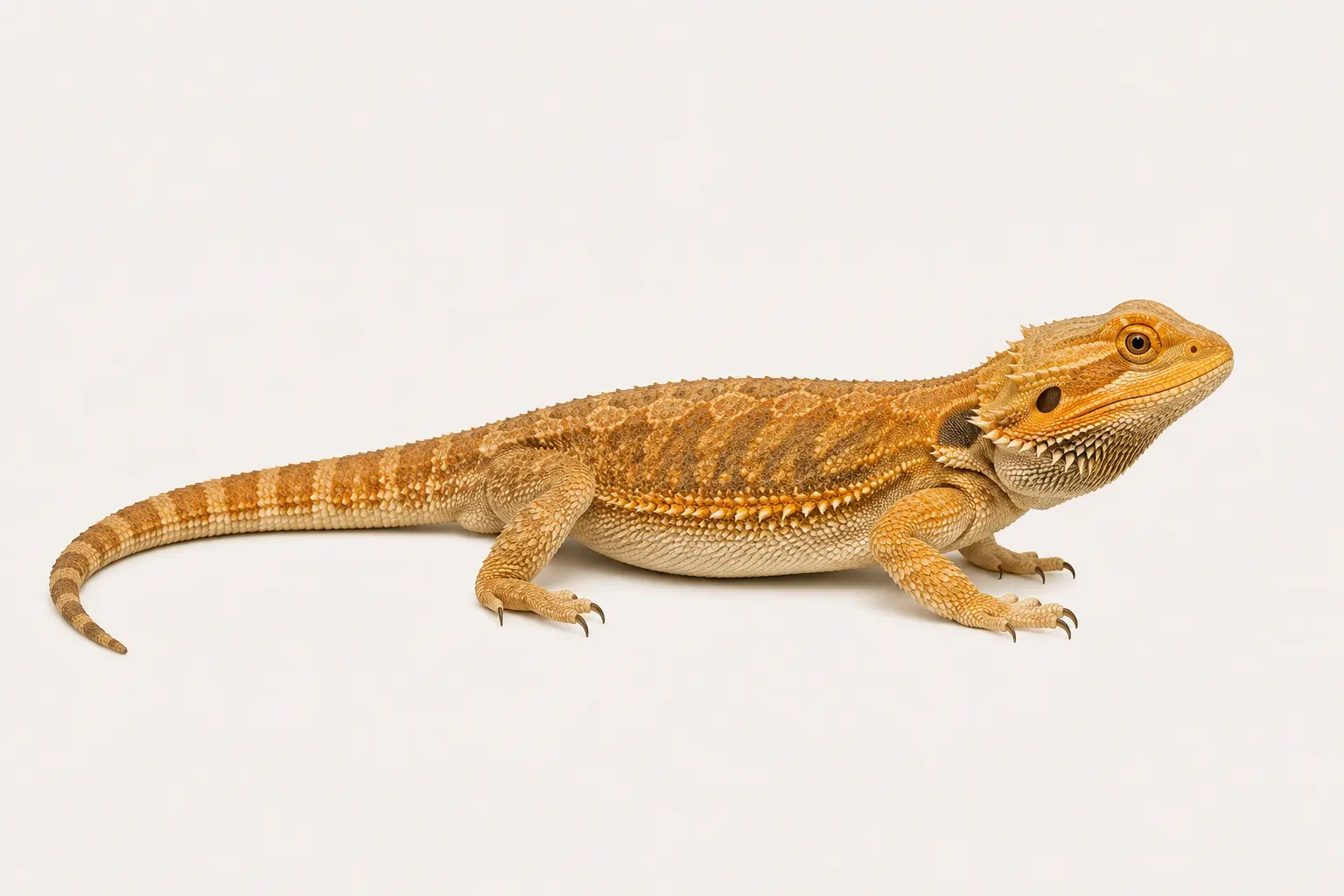




Everything you need to know about the Bearded Dragon
Keeping a Bearded Dragon properly involves more than providing a heated terrarium. This diurnal lizard must be able to choose between different temperatures, receive suitable UVB exposure, bask, hide, climb and eat a diet appropriate for its age. The balance between environment, light, heat, nutrition and calcium plays a central role in its care.
Pogona vitticeps: the central bearded dragon
Pogona vitticeps is one of the bearded dragon species native to Australia and the species most commonly encountered as a companion animal. Its natural range extends across parts of eastern and central Australia.
It occupies different dry environments, including arid areas, grasslands and scrub. Although it spends considerable time on the ground, it can also climb branches, logs and other elevated structures.
The name bearded dragon comes from the spiny throat area. This “beard” can become more prominent depending on the animal’s behavior and state.
Creating a true thermal gradient
A Bearded Dragon does not maintain its body temperature in the same way as a mammal. It uses its environment and moves between different areas to warm up or cool down.
The terrarium should therefore provide a thermal gradient rather than a uniform temperature. A warm basking area should be complemented by intermediate areas and a cooler end.
Temperatures should be measured with suitable equipment at different points in the enclosure. Relying only on the lamp setting or general room temperature does not reveal the conditions actually available to the reptile.
The basking area
The basking area is where the Bearded Dragon can expose itself to a source of heat and light. It should be easily accessible and stable enough for the animal to adopt a natural position.
A sturdy branch, platform or other solid structure can allow the dragon to choose its position beneath the heat source. The setup must prevent direct contact with equipment capable of causing burns.
Heated rocks are not an appropriate way to create this area. Heat should be provided and controlled in a way that more closely reproduces warming from above.
Why UVB is essential
The Bearded Dragon is a diurnal lizard naturally exposed to sunlight. In captivity, a correctly installed UVB source contributes to vitamin D3 synthesis and calcium regulation.
Simply having a UVB lamp is not enough. Lamp type, intensity, distance from the animal, any barrier between the lamp and reptile, and the age of the lamp all influence the exposure actually received.
UVB output gradually declines with use. Replacement and positioning should therefore follow manufacturer recommendations, ideally with appropriate monitoring of exposure when possible.
UVB, calcium and bone health
Lighting, diet and supplementation should be considered together. Dietary calcium does not automatically compensate for unsuitable lighting, and correct UVB exposure alone cannot correct an unbalanced diet.
A prolonged imbalance can contribute to metabolic bone disorders. Weakness, difficulty moving, deformities or an abnormally soft jaw require veterinary assessment.
Supplementation should be adapted to age, diet and husbandry conditions. A veterinarian experienced with reptiles can help determine an appropriate protocol.
An omnivorous diet that changes with age
Bearded Dragons are omnivorous and eat both invertebrates and plant material. The proportions change during growth: juveniles generally eat a more insect-oriented diet, while adults consume proportionally more vegetation.
Variety is important. A diet consistently based on the same insect or vegetable is less likely to be balanced than a varied diet appropriate for the animal’s age.
Meal quantity and frequency should also take account of age, size, body condition, activity and health.
Choosing feeder insects
Feeder insects should come from sources suitable for reptile nutrition. Their size should be appropriate for the Bearded Dragon and their nutritional quality should be considered.
Properly feeding insects before offering them, often called gut-loading, can improve their nutritional value. Appropriate supplementation can also be used according to the animal’s needs.
Randomly collected wild insects may expose the reptile to pesticides, parasites or potentially toxic species and are therefore not a prudent choice.
Plant foods and dietary variety
In adults, plant foods become an important part of the diet. A varied selection of suitable leafy greens and vegetables provides different nutrients and avoids an overly repetitive diet.
Not all plant foods have the same nutritional value, and some should only be offered in limited quantities. It is therefore preferable to rotate appropriate foods rather than build the diet around a single ingredient.
Fruit, when offered, should remain occasional and should not replace the leafy greens and vegetables forming the main plant component of the diet.
Hydration
Although native to relatively dry environments, a Bearded Dragon should have access to clean water. Hydration is also obtained through food.
Water should be renewed regularly and the container kept clean. Individual dragons may vary in how they use a water source.
Dehydration, unsuitable nutrition or incorrect environmental conditions can affect health. Any significant change in general condition deserves attention.
Creating a stimulating environment
A terrarium should contain more than a lamp and food dish. Sturdy branches, platforms, stable rocks, hiding places and different heights allow the Bearded Dragon to choose different locations throughout the day.
The setup must remain stable and secure. Heavy structures should not be able to fall or trap the animal, and heat sources must remain out of direct contact.
A well-designed environment allows the reptile to choose between basking, resting, observing and retreating rather than remaining constantly under the same conditions.
Shedding and skin care
Like other reptiles, Bearded Dragons periodically renew their skin. Growing juveniles may shed more frequently than adults.
The skin does not necessarily come away in one piece. During this period, areas may appear duller before the old skin separates.
Attached shed should not be forcibly pulled away. If retained skin persists abnormally around toes, the tail tip or other sensitive areas, husbandry conditions should be reviewed and advice sought when necessary.
Understanding body language
Bearded Dragons communicate extensively through posture and movement. Body orientation, head position, open-mouth basking and changes in the appearance of the beard should be interpreted in context.
A darker or expanded beard may occur during certain interactions, stressful situations or territorial behavior. A single behavior is therefore not enough to determine the animal’s emotional or health status.
Learning an individual dragon’s normal behavior is particularly useful for recognizing unusual changes.
Monitoring health
Regular observation helps identify changes earlier. Monitor appetite, weight, activity, feces, breathing, skin, eyes, mouth and the way the Bearded Dragon uses its limbs.
Persistent appetite loss, weight loss, weakness, tremors, abnormal breathing, swelling or difficulty moving warrant veterinary assessment.
In reptiles, many health problems can be related to or worsened by husbandry conditions. Information about temperatures, UVB exposure, diet and supplementation is therefore particularly useful during a veterinary consultation.
Questions to ask the breeder
Ask about the Bearded Dragon’s age, sex and morph, as well as its current diet, feeding schedule and supplements.
Ask specifically about husbandry temperatures, the type of UVB lighting used and the conditions the juvenile is accustomed to.
Also request available information about its parents, health history and handling routine. These details make continuity of care easier after arrival.
Preparing the terrarium before arrival
The terrarium should be fully operational before the Bearded Dragon arrives. Install and test heating, UVB lighting, measuring equipment, hiding places and structures before placing the animal inside.
Check the thermal gradient at different times of day to ensure the reptile can genuinely choose between different temperatures.
Initially maintaining a diet similar to that provided by the breeder also avoids combining an environmental change with an abrupt dietary change.
Find a Bearded Dragon breeder
Prousty & Co allows you to search for breeders offering Bearded Dragons using the country, region, city and postal-code filters available on this page.
Browse profiles and contact professionals directly to discuss their animals, available morphs, breeding conditions, diet, UVB lighting, husbandry temperatures and juvenile routines before making your choice.