



Understanding the Holland Lop
The Holland Lop’s small size does not mean that it requires little space or care. Like other rabbits, it has a digestive system adapted to a very high-fiber diet and teeth that grow continuously. Its lopped ears are also a feature that deserves regular monitoring. Preparing its environment, diet and veterinary care before arrival is therefore essential.
A small rabbit developed in the Netherlands
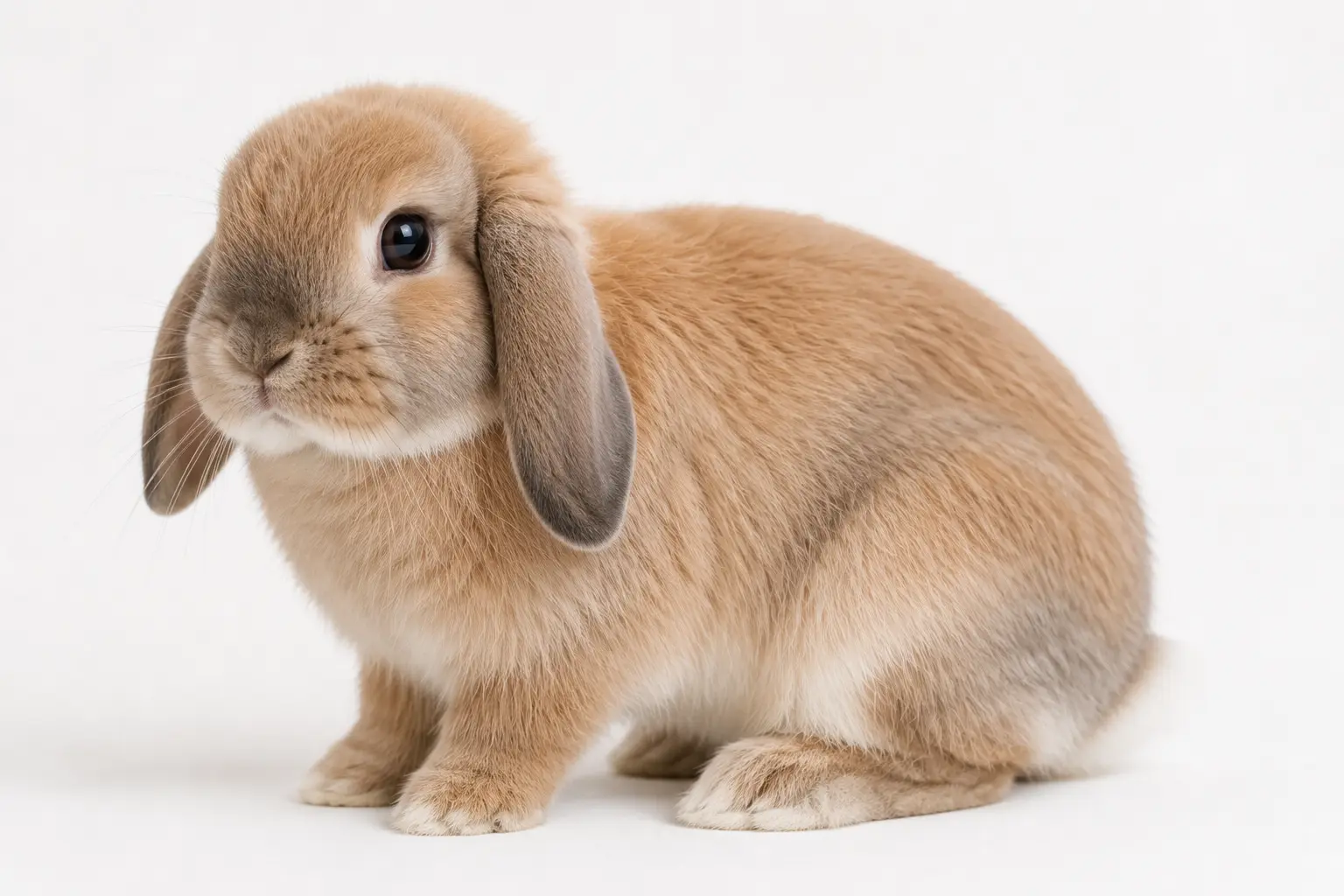
The Holland Lop was developed in the Netherlands by breeder Adriann de Cock with the goal of creating a smaller lop-eared rabbit. The breed is notably characterized by its compact body, relatively broad head and lopped ears.
Its adult appearance should not be reduced to its ears alone. Body type, size, coat characteristics and the colors or varieties encountered can differ between bloodlines and breed standards.
An active rabbit despite its small size
The Holland Lop needs daily movement. Running, hopping, standing on its hind legs, exploring and searching for food are behaviors that a suitable environment should allow.
A small cage used as the rabbit’s only living space severely limits these opportunities. A larger secure area makes it possible to create separate zones for resting, feeding, toileting, hiding and exploration.
Free-roaming periods should take place in a rabbit-proofed environment where electrical cables, unsafe plants, household products and objects that could be chewed are protected or inaccessible.
Hay at the center of the diet
Rabbits are herbivores whose digestive systems depend on a substantial intake of fiber. An adult Holland Lop should have constant access to good-quality grass hay.
Regular hay chewing also contributes to natural tooth wear. A diet based mainly on pellets does not provide the same chewing activity.
Hay should be clean, dry, palatable and easily accessible. Providing it in several locations can encourage the rabbit to eat it throughout the day.
Leafy greens, pellets and water
The diet can be complemented with a selection of suitable leafy greens and a measured quantity of pellets formulated for rabbits. Dietary changes should be gradual, particularly after moving to a new home.
Rich foods and treats should not replace the hay and plant material forming the foundation of the diet.
Fresh, clean water should always be available. The container should be checked and cleaned regularly so that the rabbit can drink easily.
Teeth that grow throughout life
A rabbit’s incisors, premolars and molars grow continuously. Their normal wear depends partly on chewing and correct dental alignment.
Changes in eating behavior, reduced hay consumption, saliva around the mouth, weight loss or unusual food selection can indicate a dental problem.
The teeth at the back of the mouth cannot be properly assessed simply by looking at the incisors. When a problem is suspected, an appropriate veterinary examination is necessary.
Monitoring lopped ears
Lopped ears give the Holland Lop its characteristic appearance. They deserve regular monitoring so that unusual debris, discharge, odor, sensitivity or behavioral changes can be detected early.
A rabbit that frequently shakes its head, scratches an ear intensely, develops a head tilt or shows balance problems should be examined by a veterinarian.
The ear canal should not be deeply cleaned using objects or randomly selected products. When in doubt, seek advice from a professional experienced in rabbit medicine.
Respecting the way rabbits interact
A rabbit can become very familiar with people without enjoying being carried constantly. Interacting at floor level generally allows the rabbit to retain more control over the encounter.
Petting should be introduced gradually and the rabbit should be free to move away. This approach helps build a relationship based on trust rather than restraint.
When handling is necessary, the body and hindquarters should be properly supported. A rabbit struggling while inadequately supported can injure itself.
Enrichment and daily activities
Exploration and foraging are important parts of a rabbit’s day. Hay can be provided in different locations, and some suitable foods can be offered in ways that encourage searching.
Safe cardboard boxes, tunnels, hiding places and suitable chewing materials can make the environment more interesting without requiring complicated equipment.
The setup can be changed periodically while retaining familiar landmarks and areas where the rabbit can retreat when it wants to rest.
Monitoring digestion and appetite
In rabbits, appetite and fecal output are important indicators. A high-fiber diet contributes to normal digestive function.
A marked reduction in appetite, refusal to eat, a substantial decrease in droppings, unusual posture or signs of pain should not be dismissed.
Digestive disorders in rabbits can progress rapidly. When a significant change persists or is accompanied by poor general condition, prompt veterinary assessment is recommended.
Monitoring health
Make a habit of regularly observing your rabbit’s weight, appetite, droppings, eyes, nose, ears, coat, claws and movement.
Loss of appetite or weight, discharge, unusual salivation, breathing difficulty, major changes in droppings or abnormal movement require particular attention.
Rabbits can conceal some signs of illness. Knowing your individual rabbit’s normal behavior therefore helps identify changes earlier.
Questions to ask before adoption
Ask about the baby rabbit’s age, current diet, habits, early environment and how it has been accustomed to human presence.
Ask about the parents and any known history of dental, ear or other health problems within the lineage.
A responsible breeder should be able to clearly explain dietary needs, required space, daily care and recommended health monitoring without presenting rabbits as exceptionally simple or low-maintenance pets.
Preparing for arrival
Prepare the living area before the rabbit arrives: hay, water, litter area, hiding places, resting space and a rabbit-proofed environment should already be available.
Ask what the baby rabbit was previously eating and avoid changing everything on the first day. Dietary transitions should be gradual.
The first few days should primarily allow the rabbit to discover its new environment at its own pace. A calm and predictable routine generally makes this adjustment easier.
Find a Holland Lop breeder
Prousty & Co allows you to search for Holland Lop breeders using the country, region, city and postal-code filters available on this page.
Browse profiles and speak with professionals about their rabbits, breeding conditions, juvenile diet, parental health and socialization before choosing a breeder.