
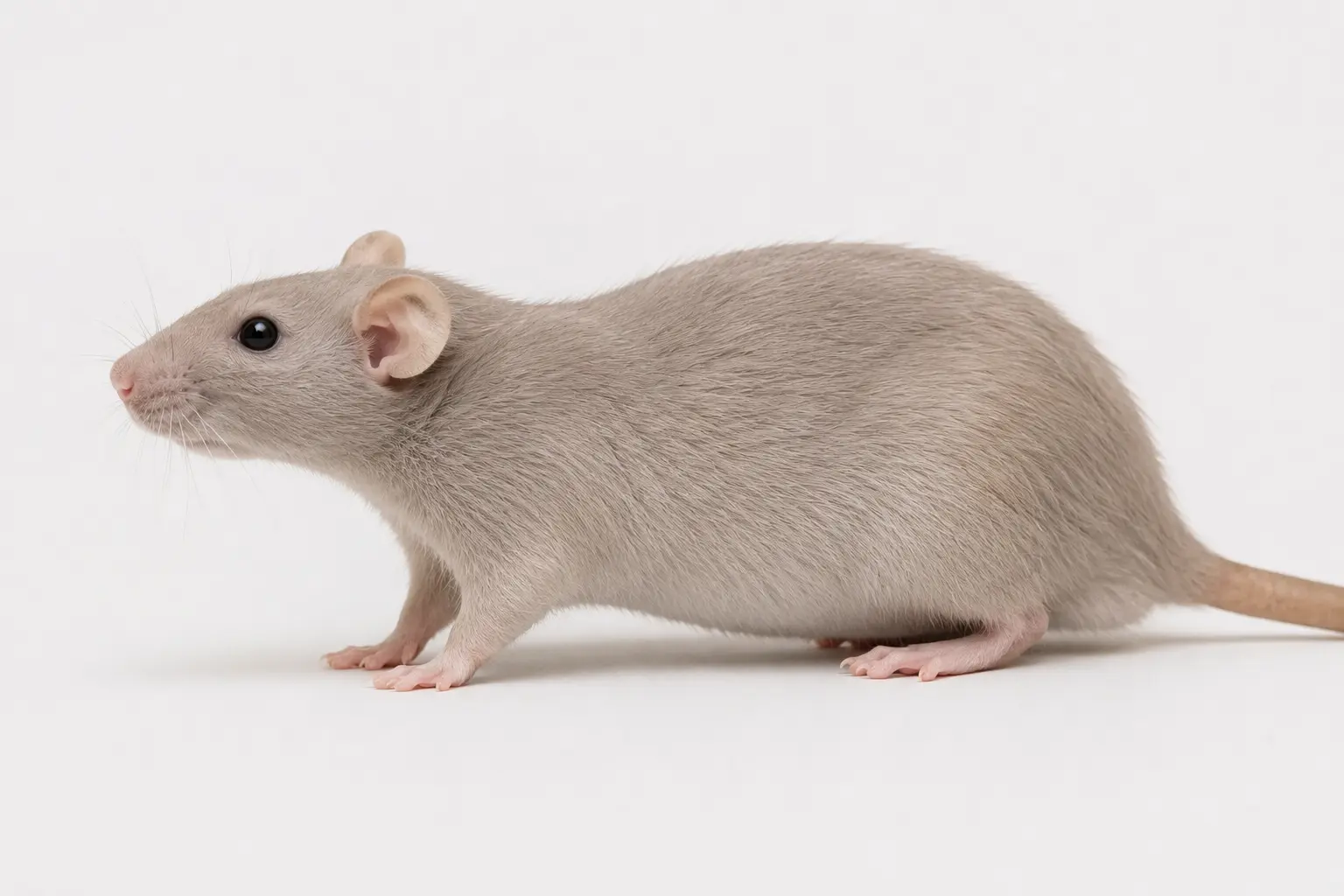




Understanding the Dumbo Rat
The term “Dumbo” primarily describes a physical characteristic of the domestic rat: larger, rounded ears positioned lower on the sides of the head than standard ears. This feature does not change its fundamental needs. A Dumbo Rat remains a social, active and intelligent domestic rat that requires compatible companions, a stimulating environment, balanced nutrition and daily observation of its health.
Dumbo: a variety rather than a separate breed
The Dumbo Rat belongs to the same domestic species as other pet rats. The term Dumbo primarily refers to the type and position of its ears.
These ears are generally large, rounded and positioned low on the sides of the head. Their placement gives the face a different appearance from that of a standard-eared rat.
A Dumbo can occur in different colors, markings and coat types. Ear appearance is therefore only one of the characteristics used to describe a domestic rat.
Ear type does not determine temperament
Dumbo Rats are sometimes described as particularly calm or affectionate. It is better not to generalize: ear type alone does not predict an individual rat’s temperament.
Bloodline genetics, early experiences, socialization, living conditions and the way a rat is approached all contribute to behavior.
When choosing a young rat, health, temperament and the breeder’s practices are therefore more important than ear appearance alone.
A social life with other rats
Domestic rats are social animals. Compatible companions provide interactions that human company alone cannot fully reproduce, including group resting, mutual grooming, play, exploration and communication.
It is therefore preferable to plan from the beginning for compatible rats to live together rather than designing the environment around an isolated individual.
Group composition should nevertheless be carefully considered to prevent unwanted breeding and to allow gradual introductions when new rats join an established group.
Spacious and well-ventilated housing
Housing should provide enough space for rats to move, climb, rest separately or together and use different areas for eating, sleeping and exploring.
Good ventilation is particularly important. Accumulated moisture, urine and ammonia in a poorly maintained environment reduces air quality.
Surfaces used by the rats should be stable and safe. Solid platforms, suitable fabrics and different resting areas help diversify the environment.
Enriching the environment
Rats are natural explorers and readily use a complex environment. Tunnels, boxes, hammocks, hiding places, safe ropes, platforms and shreddable materials can be combined to create different routes.
Foraging also provides enrichment. Part of the daily food can be offered in ways that encourage searching, manipulation and exploration rather than providing everything in one location.
There is no need to constantly replace every accessory. Occasionally changing routes or introducing new objects is enough to provide new exploration opportunities.
Safe daily exercise
Even with well-designed housing, exercise periods provide additional space and new opportunities for exploration. The chosen area should be secured before the rats are allowed to explore it.
Electrical cables, unsafe plants, medicines, household products, narrow openings and small objects that could be swallowed should be made inaccessible.
These periods are also a good opportunity to interact with the rats at their own pace, offer simple activities and observe their behavior.
A balanced diet
The diet should meet the nutritional requirements of domestic rats and remain appropriate for age, body condition and physiological status.
A complete food formulated for rats can provide a practical foundation. Complementary foods and treats should remain moderate so they do not unbalance the overall diet.
Clean water should always be available. Bowls or bottles should be checked daily to ensure they work correctly and remain clean.
Learning and interaction with people
Rats can learn routines and quickly associate certain signals with rewards or activities. This ability makes it possible to create interesting interactions without forcing the animal.
The approach should remain gradual, particularly with a young rat that has recently arrived. Allowing the rat to investigate a hand and rewarding calm behavior generally encourages trust.
Rough handling, repeatedly chasing a rat around the cage or punishment should be avoided. Regular and predictable interaction is more conducive to building trust.
Monitoring health every day
Daily observation helps identify changes early. Monitor appetite, weight, activity, breathing, eyes, nose, skin, coat and movement.
Noisy or difficult breathing, persistent sneezing, unusual discharge, a lump, weight loss, a marked reduction in activity or a significant change in appetite warrant veterinary advice.
Because rats are small animals, some conditions can change quickly. Knowing each individual’s normal behavior makes unusual changes easier to identify.
Choosing a responsible breeder
A responsible breeder does not select animals solely for appearance. Temperament, health and available information about previous generations should also be considered.
Ask about the breeding animals’ ages, known bloodline history, living conditions of adults and young rats and the work done to gradually familiarize babies with human interaction.
The environment should be clean and properly ventilated. Animals should be active and appear to be in good general condition.
Questions to ask before adoption
Ask about the young rats’ age and sex, current diet, group composition and how they have been socialized.
Ask about the parents’ health and temperament and any known problems within the bloodline. This information is more useful when preparing for adoption than Dumbo appearance alone.
Also ask which food and bedding are currently used so that unnecessary changes can be avoided immediately after arrival.
Preparing for your rats’ arrival
Housing should be ready before arrival, with food, water, bedding, several sleeping areas, hiding places and opportunities for exploration immediately available.
The exercise area should also be secured. Rats can squeeze through small openings and chew many different materials.
The first few days should allow newcomers to gradually discover their environment. Short, calm and regular interactions can then help build trust.
Find a Dumbo Rat breeder
Prousty & Co allows you to search for Dumbo Rat breeders using the country, region, city and postal-code filters available on this page.
Browse profiles and speak with breeders about their bloodlines, breeding conditions, parental health, socialization of young rats and adoption conditions before making your choice.