Find a guinea pig breeder
Welcoming a guinea pig means preparing its environment, diet and social life before arrival. Despite their small size, guinea pigs have specific needs regarding space, dietary fiber, vitamin C, activity and companionship. Prousty & Co allows you to search for guinea pig breeders and discover the breeds and varieties they offer.
How to choose a guinea pig breeder
Ask about the animals’ living conditions, diet, socialization and established routines. The breeder should be able to explain the characteristics of the guinea pigs offered and answer your questions about their daily care.
Where possible, also observe the breeding environment: cleanliness, available space, hiding places, food and the general condition of the animals. Ask what the young guinea pig currently eats so you can provide a gradual transition after arrival.
Understanding guinea pig breeds and varieties
Guinea pigs can have very different coats depending on breed or variety. Hair length, texture, growth pattern and colors can vary, and these differences may also affect grooming requirements.
Before choosing mainly on appearance, learn about the required care and the individual animal’s temperament. Your choice should also match the time and living conditions you can provide.
Guinea pigs are social animals
Guinea pigs are social animals and generally benefit from the presence of compatible companions. Their social arrangement should therefore be considered before adoption rather than only after the first animal arrives.
The animals’ sex, temperament, history and available space should be considered when creating a compatible group. If breeding is not intended, make sure the group composition prevents unwanted mating.
Prepare the habitat before arrival
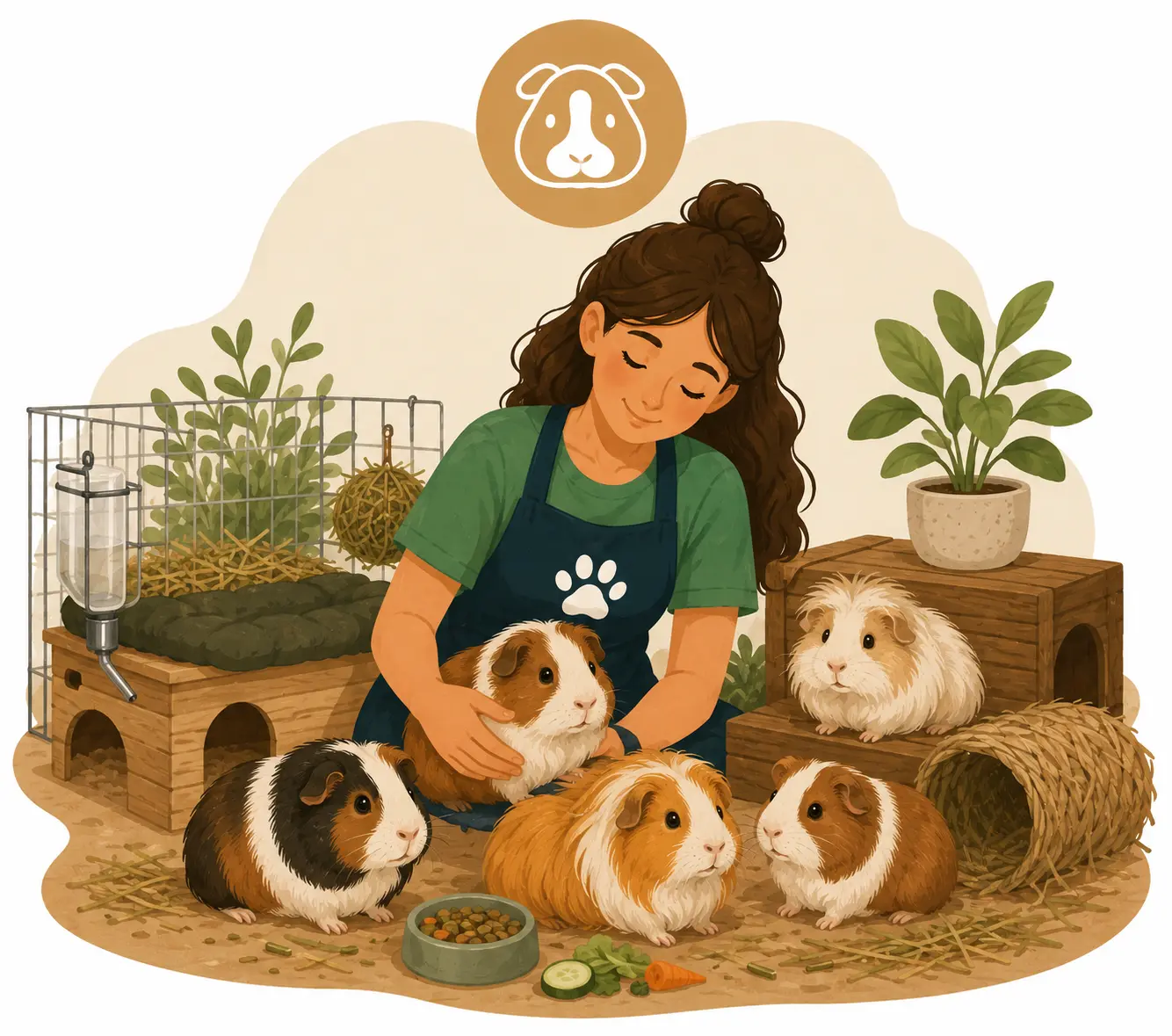
The living area should be prepared before the guinea pig arrives. It should allow the animals to move, rest, eat and hide, with suitable flooring for their feet and good ventilation.
Provide several resting areas and hiding places when multiple guinea pigs live together. The environment should also be protected from falls, hazardous objects, toxic plants and access by other animals that could injure them.
Hay as the foundation of a guinea pig’s diet
Guinea pigs are herbivores whose diet needs to provide plenty of fiber. Good-quality hay should form the foundation of the diet and remain available so they can eat it regularly.
Chewing fibrous foods also contributes to the normal wear of teeth, which grow continuously. A diet that is too low in fiber can therefore contribute to digestive and dental problems.
Why is vitamin C important?
Guinea pigs cannot produce the vitamin C their bodies require. They therefore need a regular dietary source of this vitamin.
Food formulated specifically for guinea pigs and suitable fresh vegetables can contribute to this intake. Requirements may vary according to age and condition; if you are unsure about diet or supplementation, ask a veterinarian for advice.
Pellets and vegetables: complementing rather than replacing hay
Pellets formulated for guinea pigs and a selection of suitable vegetables can complement hay. They should not, however, turn the diet into one that is low in fiber.
Ask the breeder which foods are being provided before adoption. Significant dietary changes should be gradual to give the digestive system time to adapt.
Fresh water and daily care
Fresh water should remain available, and the watering system should be checked regularly. Containers and drinking points can become soiled and therefore require frequent cleaning.
The habitat also requires regular maintenance. Wet or soiled areas should be removed, and bedding, hiding places, hay and equipment should be checked.
Providing activity and enrichment
A guinea pig needs opportunities to explore, move around, forage and hide. Suitable tunnels, shelters and enrichment items can make the environment more varied.
Accessible objects should be safe, non-toxic and appropriate for an animal that also explores with its teeth. Time outside the main enclosure should take place in a secure area under supervision.
Handling a guinea pig carefully
Guinea pigs are prey animals and can be frightened by sudden approaches or unfamiliar handling. Calm handling and proper body support help reduce the risk of falls and fear.
Ask the breeder how accustomed the young animal is to human contact and how it responds to being held. Gradual familiarization is preferable to forced handling.
What should you check before adoption?
Observe the guinea pig’s general condition, including activity, movement, coat, eyes, nose and breathing. Also ask about diet, age, sex, origin and social life before adoption.
If you are adopting several guinea pigs, pay particular attention to their sex and group composition. Incorrect sex identification can quickly result in unintended breeding.
Preparing for arrival at home
Prepare the habitat, hay, water, familiar food and hiding places before bringing the guinea pig home. The young animal should be able to discover its new environment without immediately being subjected to frequent handling.
Initially keeping a diet similar to the breeder’s can make the transition easier. If you want to change certain foods, do so gradually.
Monitoring appetite and behavior
Learn your guinea pigs’ normal habits, including food intake, activity, movement and interactions with companions. This makes changes easier to notice.
A significant decrease in appetite, difficulty eating, changes in droppings, abnormal breathing, weakness or a marked behavioral change are reasons to seek veterinary advice promptly.
Planning appropriate veterinary care
Before or soon after adoption, identify a veterinarian who can care for guinea pigs. This means you know whom to contact if a health issue arises or if you have questions about diet, teeth or reproduction.
A breeder’s advice is useful for understanding the animal’s habits, but it does not replace veterinary assessment when a medical problem is suspected.
What should you ask the breeder?
Ask about the guinea pig’s age and sex, current diet, living conditions, companions it has lived with, handling experience and any particular characteristics of its breed or coat.
Use this discussion to learn which hay, pellets and vegetables the animal is accustomed to, as well as recommendations for the first few days of transition.
Check requirements applicable to acquisition
Requirements relating to breeding, sale, identification, transport or animal ownership can vary according to country, territory and circumstances. Before acquisition, check any applicable requirements with the relevant authorities where you live.
Find a guinea pig breeder on Prousty & Co
Prousty & Co allows you to search for guinea pig breeders and discover the breeds and varieties presented by professionals.
Review profiles and contact breeders directly to learn about available animals, their living conditions, diet, age, sex and adoption arrangements.